Tuesday, November 28, 2006

Black metal production

The low quality of Black Metal production values is proverbial - flat, harsh, raw, tinny, trebly, thin, hissy and fuzzy are some of the adjectives for the production used by both detractors and aficionados of the genre. On this site, a Black Metal fan answers his own rhetorical question: "But what would a black metal album be without low production values? Not a black metal album".

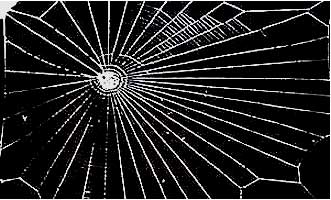
With the exception perhaps of the originators of the genre, the low quality of production is part of Black Metal "spider's web of significance". The low production values are a matter of choice, not of economic necessity:
  • Black Metal was started in defiance of Death Metal. To distinguish itself aesthetically from Death metal, Black metal had a low and dirty sounding production quality, instead of having high-quality, clean production. However, Black Metal not only strived to distinguish itself on an aesthetic level from Death Metal: it also strived to be more controversial in lyrical - i.e. ideological - content than Death Metal. Here, aesthetic considerations seem to cause ideological choices.
  • The choice for low production values not only has an aesthetic meaning, but also an ideological meaning. Black Metal is a carnival genre, a genre of destruction and uncrowning. The good is dethroned in favor of it's opposite - both in a moral-ideological sense (evil) and in an aesthetic sense (bad in the sense of ugly). Black Metal strives for the destruction of the bonum, verum, pulchrum. (This inversion of the usual hierarchy of adjectives that this ideology entails, can sometimes make for confusing reading of Black Metal album reviews - adjectives that are normally negative should in these cases be read as positive recommendations - this confusion is quite the same as that which I had when I first read Bataille's work).
Thus, the ideological and aesthetic strands of Black Metal are closely interwoven and mutually dependent on each other.

However, the analysis of Black Metal production values cannot stop at the conclusion that a Black Metal album without low production values is not a Black Metal Album.

Interestingly, some bands have, while remaining flat, harsh, raw, tinny, trebly, thin and fuzzy, sculpted that characteristic sound into an artform onto itself. Think of the starkly expressionistic chiaroscuro sound of Spektr and Haemoth, of the ghostly dementia of Striborg's production, and of the Shoegazer-Black Metal sound of Lurker of Chalice. And those who complain that Xasthur makes the same records over and over again, fail to acknowledge that the development is not in the musical structures but in the sound world. Malefic is a master of grey monochrome, the Yves Klein of Black Metal. Thus, anti-aestheticism has been recuperated into the world of the aesthetic. Does this spell the end for Black Metal's transgressive appeal, or is it on the contrary a sign of the genre's undiminished dynamism?

Monday, November 27, 2006

Coil - Häxan

I saw Benjamin Christensen expressionistic film Häxan many years ago in the Amsterdam Film Museum - and today found this rather nice YouTube video in which Coil's "First Five Minutes After Death" and "Golden Section" (both from Horse Rotorvator) provide the soundtrack to that film.

Saturday, November 25, 2006

Blackened woman

Sonny Sharrock's "Black Woman" is to late 'sixties blues and rock what Khlyst's "Chaos is my name" is to black and doom metal.

Khlyst is a collaboration between metal maverick James Plotkin and northern siren Runhild Gammelsaeter. Gammelsaeter made her burn mark on metal with Thorr's Hammer, an early (1995) doom project of Sunn o)))'s Stephen O'Malley and Greg Anderson; after disappearing into oblivion for almost a decade, she rematerialized on Sunn o)))'s 'White 1' album. And James Plotkin? To make more than a cursory sketch of his musical career would require this review to be tens of thousands words long. Suffice to say that his roots are in the fertile soil of late-'eighties-to-early-'nineties British grindcore, the very same sooty and smelly soil bands like Skullflower, Godflesh and Scorn grew from. Like these bands, Plotkin's work has always been ideosyncratic: his grindcore band 'Old' used: "vocoded voice, looped guitar, synth guitar, bass, tapes, rhythm machine... and a drop of 303" - can that still be called grindcore? Plotkin's best known band is, without any doubt, the now defunct Khanate.

Sonny Sharrock (1940-1994) was a free jazz electric guitarist. He played with many jazz greats, such as Dave Burrell, Norris Jones (a.k.a. Sirone), Milford Graves, Elvin Jones, Peter Brötzman, John Zorn, Miles Davis, Cecil Taylor, Pharoah Sanders, and Herbie Mann. Transposing John Coltrane's and Pharaoh Sanders free jazz saxophone technique to the guitar, his axe was a dissonant blowtorch welding fiery free jazz to the blues. His playing has been compared with that of avant-garde painter Jackson Pollock's approach to paint. Sharrock's 1996 album "Black Woman" is perhaps the best known of his oeuvre. On the album, Sharrock's wife Linda sings. Sings? It is more of a free jazz speaking in tongues, extatic chanting, shouting, screaming, howling and yelping ... a voice in terribly bad taste but somehow still engrossing in it's shamelessness - a very late-1960's shamelessness, that is.

Why compare Khlyst's "Chaos is my name" to Sharrock's "Black woman"? The eight chapters of Khlyst's shortish (35 minutes) album feature Plotkin on guitar - which is unusual, as he normally play bass. Plotkin's guitar conjures up a Sharrock-like soundworld, albeit one heavily treated by electronica - visceral drones and monolithic sub-basses, screaming overtones and distortion. And Runhild Gaemmelsaeter is Plotkin's Linda, but an undead Linda, screeching, grunting and moaning like a banshee, like a decomposing freejazz Diamanda Galas without professional operatic training.

Notwithstanding the musical affinities between Sharrock and Khlyst,"Chaos is my name" is a far cry from 1960's free jazz black power angry-yet-selfconfident, progressive, emancipatory optimism. Full of failures, sufferings, anxieties, terrors, rages, and humiliations, it is a Niflheim, a dark and misty hell of an album, and it's orientation on the retro-futurist axis is the reverse of that of bands like Broadcast, or of British record labels Mordant and Ghost Box's rosters - it is futuristically retrogressive, oriented backwards, backwards, downwards, spiraling towards the blackened void that history tries to hide but cannot help but point towards.

Wednesday, November 22, 2006

Crime and punishment

Below one of the most bloodcurdling descriptions of cruelty against animals I know, from my current reading, Dostoevsky's "Crime And punishment". The only comparable scene, qua intensity of description, is the terrifying sacrifice of the kitten from Yukio Mishima's "The Sailor Who Fell From Grace With The Sea". Do any readers of this blog know comparable scenes in world literature? Please use the comments to tell me!

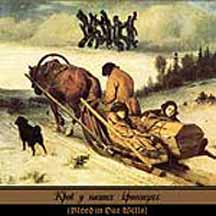
"And now he dreamt that he was walking with his father past the tavern on the way to the graveyard; he was holding his father’s hand and looking with dread at the tavern. A peculiar circumstance attracted his attention: there seemed to be some kind of festivity going on, there were crowds of gaily dressed townspeople, peasant women, their husbands, and riff-raff of all sorts, all singing and all more or less drunk. Near the entrance of the tavern stood a cart, but a strange cart. It was one of those big carts usually drawn by heavy cart-horses and laden with casks of wine or other heavy goods. He always liked looking at those great cart-horses, with their long manes, thick legs, and slow even pace, drawing along a perfect mountain with no appearance of effort, as though it were easier going with a load than without it. But now, strange to say, in the shafts of such a cart he saw a thin little sorrel beast, one of those peasants’ nags which he had often seen straining their utmost under a heavy load of wood or hay, especially when the wheels were stuck in the mud or in a rut. And the peasants would beat them so cruelly, sometimes even about the nose and eyes and he felt so sorry, so sorry for them that he almost cried, and his mother always used to take him away from the window. All of a sudden there was a great uproar of shouting, singing and the balalaika, and from the tavern a number of big and very drunken peasants came out, wearing red and blue shirts and coats thrown over their shoulders.

“Get in, get in!” shouted one of them, a young thicknecked peasant with a fleshy face red as a carrot. “I’ll take you all, get in!”


But at once there was an outbreak of laughter and exclamations in the crowd.
“Take us all with a beast like that!” “Why, Mikolka, are you crazy to put a nag like that in such a cart?” “And this mare is twenty if she is a day, mates!”

“Get in, I’ll take you all,” Mikolka shouted again, leaping first into the cart, seizing the reins and standing straight up in front. “The bay has gone with Matvey,” he shouted from the cart—“and this brute, mates, is just breaking my heart, I feel as if I could kill her. She’s just eating her head off. Get in, I tell you! I’ll make her gallop! She’ll gallop!” and he picked up the whip, preparing himself with relish to flog the little mare.
“Get in! Come along!”

The crowd laughed. “D’you hear, she’ll gallop!”
“Gallop indeed! She has not had a gallop in her for the last ten years!” “She’ll jog along!” “Don’t you mind her, mates, bring a whip each of you, get ready!” “All right! Give it to her!” They all clambered into Mikolka’s cart, laughing and making jokes. Six men got in and there was still room for more. They hauled in a fat, rosy-cheeked woman. She was dressed in red cotton, in a pointed, beaded headdress and thick leather shoes; she was cracking nuts and laughing. The crowd round them was laughing too and indeed, how could they help laughing? That wretched nag was to drag all the cartload of them at a gallop! Two young fellows in the cart were just getting whips ready to help Mikolka. With the cry of “now,” the mare tugged with all her might, but far from galloping, could scarcely move forward; she struggled with her legs, gasping and shrinking from the blows of the three whips which were showered upon her like hail. The laughter in the cart and in the crowd was redoubled, but Mikolka flew into a rage and furiously thrashed the mare, as though he supposed she really could gallop.

“Let me get in, too, mates,” shouted a young man in the crowd whose appetite was aroused.

“Get in, all get in,” cried Mikolka, “she will draw you all—I’ll beat her to death!” And he thrashed and thrashed at the mare, beside himself with fury.

“Father, father,” he cried, “father, what are they doing? Father, they are beating the poor horse!”


“Come along, come along!” said his father. “They are drunken and foolish, they are in fun; come away, don’t look!” and he tried to draw him away, but he tore himself away from his hand, and, beside himself with horror, ran to the horse. The poor beast was in a bad way. She was gasping, standing still, then tugging again and almost falling.


“Beat her to death,” cried Mikolka, “it’s come to that. I’ll do for her!”


“What are you about, are you a Christian, you devil?” shouted an old man in the crowd.
“Did any one ever see the like? A wretched nag like that pulling such a cartload,” said another. “You’ll kill her,” shouted the third.

“Don’t meddle! It’s my property, I’ll do what I choose. Get in, more of you! Get in, all of you! I will have her go at a gallop!…” All at once laughter broke into a roar and covered everything: the mare, roused by the shower of blows, began feebly kicking. Even the old man could not help smiling. To think of a wretched little beast like that trying to kick! Two lads in the crowd snatched up whips and ran to the mare to beat her about the ribs. One ran each side. “Hit her in the face, in the eyes, in the eyes,” cried Mikolka. “Give us a song, mates,” shouted some one in the cart and every one in the cart joined in a riotous song, jingling a tambourine and whistling. The woman went on cracking nuts and laughing. …

He ran beside the mare, ran in front of her, saw her being whipped across the eyes, right in the eyes! He was crying, he felt choking, his tears were streaming. One of the men gave him a cut with the whip across the face, he did not feel it. Wringing his hands and screaming, he rushed up to the grey-headed old man with the grey beard, who was shaking his head in disapproval. One woman seized him by the hand and would have taken him away, but he tore himself from her and ran back to the mare. She was almost at the last gasp, but began kicking once more.


“I’ll teach you to kick,” Mikolka shouted ferociously. He threw down the whip, bent forward and picked up from the bottom of the cart a long, thick shaft, he took hold of one end with both hands and with an effort brandished it over the mare. “He’ll crush her,” was shouted round him. “He’ll kill her!” “It’s my property,” shouted Mikolka and brought the shaft down with a swinging blow. There was a sound of a heavy thud. “Thrash her, thrash her! Why have you stopped?” shouted voices in the crowd. And Mikolka swung the shaft a second time and it fell a second time on the spine of the luckless mare. She sank back on her haunches, but lurched forward and tugged forward with all her force, tugged first on one side and then on the other, trying to move the cart. But the six whips were attacking her in all directions, and the shaft was raised again and fell upon her a third time, then a fourth, with heavy measured blows. Mikolka was in a fury that he could not kill her at one blow. “She’s a tough one,” was shouted in the crowd. “She’ll fall in a minute, mates, there will soon be an end of her,” said an admiring spectator in the crowd. “Fetch an axe to her! Finish her off,” shouted a third. “I’ll show you! Stand off,” Mikolka screamed frantically; he threw down the shaft, stooped down in the cart and picked up an iron crowbar. “Look out,” he shouted, and with all his might he dealt a stunning blow at the poor mare. The blow fell; the mare staggered, sank back, tried to pull, but the bar fell again with a swinging blow on her back and she fell on the ground like a log. “Finish her off,” shouted Mikolka and he leapt, beside himself, out of the car. Several young men, also flushed with drink, seized anything they could come across—whips, sticks, poles, and ran to the dying mare. Mikolka stood on one side and began dealing random blows with the crowbar. The mare stretched out her head, drew a long breath and died.

“You butchered her,” some one shouted in the crowd.


“Why wouldn’t she gallop then?”


“My property!” shouted Mikolka, with bloodshot eyes, brandishing the bar in his hands. He stood as though regretting that he had nothing more to beat.


“No mistake about it, you are not a Christian,” many voices were shouting in the crowd.
But the poor boy, beside himself, made his way screaming, through the crowd to the sorrel nag, put his arms round her bleeding dead head and kissed it, kissed the eyes and kissed the lips.… Then he jumped up and flew in a frenzy with his little fists out at Mikolka. At that instant his father who had been running after him, snatched him up and carried him out of the crowd.

“Come along, come! Let us go home,” he said to him.
“Father! Why did they … kill … the poor horse!” he sobbed, but his voice broke and the words came in shrieks from his panting chest.

“They are drunk.… They are brutal … it’s not our business!” said his father. He put his arms round his father, but he felt choked, choked. He tried to draw a breath, to cry out—and woke up. He waked up, gasping for breath, his hair soaked with perspiration, and stood up in terror. “Thank God, that was only a dream,” he said, sitting down under a tree and drawing deep breaths. “But what is it? Is it some fever coming on? Such a hideous dream!”

Thursday, November 16, 2006

Black hexagon sunn

Another playlist, it's title a Boards of Canada paraphrase:


Again, with some YouTube videos.

The Wicker Man:


Burzum:


Coil:


Sielwolf:


Sunn 0)))


The Third Eye Foundation


Stockhausen:


The Bug:


Boards of Canada:


Wednesday, November 15, 2006

Spider's web II

A few posts back, I wrote that Black Metal is a culture, a spider's web of significance where ideological and aesthetic strands are closely interwoven and mutually dependent on each other.

Nonetheless, vast differences in ideological perspective are apparent within the Black Metal genre, often related to the local culture of the place of origin of the band in question. Thus, Eastern European bands (Drudkh, Hate Forest) often have a strongly nationalistic orientation, an orientation which for example is not so apparent in Californian Black Metal bands (Weakling, Leviathan, Xasthur) and "orthodox evil" French Black Metal bands (Blut aus Nord, Deathspell Omega, Haemoth). The ideology of some more artistically inclined Black Metal artists is more likely to be extremely liberal (tending towards anarchism) than highly intolerant.

The ideological orientation of Black Metal bands is interwoven with their aesthetic orientation: if a Black Metal album features a lot of folk, the chances are that the ideological orientation of the band is nationalistic, intolerant and paganistic. Folk music in Black Metal signifies the Volk, the national heritage (a completely different meaning than Folk music has in Free Folk, or for Bob Dylan for example). Misanthropy, which is an important theme in Californian Black Metal, is tied to a very specific Californian Black Metal sound: Black Metal with strange song structures, bizarre parts, and an accent on mood and ambience - as if hatred of Man goes hand in hand with the destabilization of 'normal' song structure.

Without doubt, the ideological and aethetic differences are causally linked to the different uses of Black Metal in these specific local cultures.

I can of course only guess what uses Black Metal has in Lebanese society (check this interview with Ayat, or the information "Dark Ritualistic/Barbaric Black Metal" band Kafan on FMP), but one can be sure that they are very different from the uses of the genre in the Ukraine or San Fransisco - if only because the political and religious situation is vastly different. Even the name of Kafan points towards the importance of the local context of the band in question: "Kafan" is the shroud of the dead Muslim. And also Ayat's statements that "Every prejudice westerners might have regarding Arabs is correct" and the stress on the irreligious nature of the music provide insight into this Black Metal scene's relationship to local society and culture.

And what to think of Iranian Black Metal? Wikipedia suggests that these bands are rather nationalistic, but I can only imagine what it must be like to make music of Satanic origin in a fundamentalist country. And Iranian Black Metal cannot derive meaning only from it's relation to local culture, but must also derive meaning from the relation of that local culture to the wider world, and specifically to the West - origin of Black Metal, focus of hatred for Shi'ite Fundamentalists.

"However, Black Metal culture is not woven as neatly as spider's webs usually are... Perhaps they're more like the webs of spiders on drugs: chaotic, tangled ... it is an eccentric, centrifugal genre after all".