Showing posts with label HP Lovecraft. Show all posts

Saturday, January 17, 2009

Caïna - Temporary Antennae (pt. 2)

Listening to Caïna's Black Metal, as presented on his recent album Temporary Antennae, is an intertextual pleasure. Caïna's mastermind, Andrew Curtis-Brignell, alludes to literature, film and art. In this post some of these allusions are explored.

Caïna

"If I had verses harsh enough and rasping
as would befit this dismal hole
upon which all the other rocks weigh down,
more fully would I press out the juice
of my conception. But, since I lack them,
with misgiving do I bring myself to speak.
It is no enterprise undertaken lightly --
to describe the very bottom of the universe --
nor for a tongue that still cries 'mommy' and 'daddy.'"

Curtis-Brignell derives his band's name from the XXXIInd Canto of the Inferno from Dante's Divina Commedia. The lines quoted above open this Canto. From various sources around the internet:

"Dante divides circle 9, the circle of treachery--defined in Inferno 11 as fraudulent acts between individuals who share special bonds of love and trust (61-6)--into four regions. Caina is named after the biblical Cain (first child of Adam and Eve), who slew his brother Abel out of envy after God showed appreciation for Abel's sacrificial offering but not Cain's (Genesis 4:1-17); condemned to a vagabond existence, Cain later built a city (named after his son, Henoch) that for certain Christian theologians--notably Augustine (City of God, book 15)--represented the evils of the earthly city. In the circle of the lustful, Francesca identified her husband (Gianciotto)--who murdered her and Paolo (Gianciotto's brother)--as a future inhabitant of Caina (Inf. 5.107). Dante's attention is here drawn to two brothers, the ghibelline Napoleone and the guelph Alessandro, who murdered one another because of a dispute over their inheritance (Inf. 32.55-60)."


Grief

The track which opens 'Temporary Antennae' ends with Andrew Curtis-Brignell reading a stanza from 'Grief' a poem found at the end of William Hope Hodgson's fantastique novel 'The House On The Borderland'.

The complete book can be found on Project Gutenberg (here). The Providence recluse, H.P. Lovecraft, wrote about the book in his 'Supernatural Horror In Literature': "The House on the Borderland (1908) -- perhaps the greatest of all Mr. Hodgson's works -- tells of a lonely and evilly regarded house in Ireland which forms a focus for hideous otherworld forces and sustains a siege by blasphemous hybrid anomalies from a hidden abyss below. The wanderings of the Narrator's spirit through limitless light-years of cosmic space and Kalpas of eternity, and its witnessing of the solar system's final destruction, constitute something almost unique in standard literature. And everywhere there is manifest the author's power to suggest vague, ambushed horrors in natural scenery. But for a few touches of commonplace sentimentality this book would be a classic of the first water."

You can hear Coil's Jhonn Balance reading William Hope Hodgson's poem on a rather lovely limited edition picture disc 7", which was released in 2005 to commemorate Balance who fell to his death on November 13th 2004 (4 years ago already!). The reading is accompanied by a beautiful drone crafted by John Everall, one of the unsung heroes of the British Industrial music era (the 1993 album Pathogenesis is a classic!). You can find the 7", which is of course completely and utterly out of print, here. I've reproduced the poem below.


Grief - William Hope Hodgson

Fierce hunger reigns within my breast,
I had not dreamt that this whole world,
Crushed in the hand of God, could yield
Such bitter essence of unrest,
Such pain as Sorrow now hath hurled
Out of its dreadful heart, unsealed!

Each sobbing breath is but a cry,
My heart-strokes knells of agony,
And my whole brain has but one thought
That nevermore through life shall I
(Save in the ache of memory)
Touch hands with thee, who now art naught!

Through the whole void of night I search,
So dumbly crying out to thee;
But thou art not; and night's vast throne
Becomes an all-stupendous church
With star-bells knelling unto me
Who in all space am most alone!

An hungered, to the shore I creep,
Perchance some comfort waits on me
From the old Sea's eternal heart;
But lo! from all the solemn deep,
Far voices out of mystery
Seem questioning why we are apart!

"Where'er I go I am alone
Who once, through thee, had all the world.
My breast is one whole raging pain
For that which was, and now is flown
Into the Blank where life is hurled
Where all is not, nor is again!"


The Innocents

Considering that he has a degree in film studies, it should come as no surprise that Andrew Curtis-Brignell's music references film. On 'Temporary Antennae' samples a song, 'Oh Willow Waly', from the 1961 psychological horror film The Innocents. The film, based on the novella The Turn of the Screw by Henry James, Caïna's album too. The song simulates two types of 'authenticity': that of children and that of folk singers. It appears to be sung by an eleven year old child, but was actually sung by Isla Cameron, a Scottish actress and singer who was 31 at the time. And the song itself seems to be a traditional folk song, but was actually written by British screen writer Paul Dehn and French composer George Auric. The lyrics - considering they are supposedly sung by an 11-year-old - evince a sensuality and suicidal character that borders on the perverse. "The Infant Kiss", a song by Kate Bush from her 1980 album Never for Ever, was inspired by the film. The lyrics to Kate Bush's song are narrated in the first person by a woman who has an almost pedophile infatuation with a young boy in her care.

Below are the lyrics for "Oh Willow Waly", and YouTube videos with the trailer for the Innocents, with the song "Oh Willow Waly" and with Kate Bush's "The Infant Kiss".

Oh, Willow Waly

We lay my love and I beneath the weeping willow.
But now alone I lie and weep beside the tree.

Singing "Oh willow waly" by the tree that weeps with me.
Singing "Oh willow waly" till my lover return to me.

We lay my love and I beneath the weeping willow.
A broken heart have I. Oh willow I die, oh willow I die.

Theatrical trailer for The Innocents


Willow Waly - Song from The Innocents


*

Kate Bush - The Infant Kiss


Gentian Osman

Andrew Curtis-Brignell considers the Washington-based artist Gentian Osman to be Caïna's official visual interpreter. Here is her Flickr set, which is very nice.

Monday, November 24, 2008

La Taranta (pt. 3)

Ernesto De Martino's fascinating 1961 ethnography of Apulian Tarantism, 'The Land of Remorse: A Study of Southern Italian Tarantism' is strongly influenced by the idealist humanism of Italian philosopher Benedetto Croce.

Because of its optimist, positivist, rational, humanitarian, decent nature, one can read De Martino's ethnography in the way proposed by Roland Barthes in 'The Pleasure of Text': "The more decent, well-spoken, innocent and saccharine a story is told, the easier it is to invert it, the easier it is to blacken it, the easier it is to read it against the grain".

Reading of De Martino's ethnography against the grain is certainly easy- one can destabilize the book's idealism when it is creatively misread in a way informed by Lovecraftian paranoia and the Cthulhu mythos!

Just consider the following quotations from the chapter on the medieval origins of Tarantism:

"First of all, there is the problem of the phenomenon's origins, the period and historical climate in which tarantism came into being, with its own forms, on the ruins of the orgiastic cults and the mystery religions. In this regard, it is impossible for us to trace any useful indication of the symbolism of the taranta in the Phisiologus and medieval bestiaries, or in the prayers, spells and recipes collected by Pradel in Griechische und Süditalienische Gebete, Beschwörungen und Rezepte des Mittelalters. The same must be said for Arab writers. (...) Furthermore, in the De Venenis by Cristoforo Degli Onesti, a Florentine who taught medicine in Padua from 1379 to 1386, there is a chapter which treats De morsu tarantulae. Although this chapter appears in the index of the manuscript preserved in the National Library of Paris, [it] is missing from the text (...)".

Why is the chapter on the bite of the tarantula missing from De Venenis? Did De Martino check all Arab writers - or did he omit to mention that he found some blasphemous indications in the work of the mad one? Why did the authorities really close up the miraculous well at St. Paul's Chapel in Corso Garibaldi in Galatina in July 1959, the well to which those afflicted by Tarantism flocked every year? Doesn't the fact that Tarantism only runs in certain family point towards an Innsmouth-like atavism? And what about the 'Sanpoalari' - Southern Italian snake charmers and traveling healers? To which secrets are they privy? And why doesn't the spider which is held responsible for tarantism correspond to any arachnid of modern zoology? Is there any connection between tarantism and the spider-god Atlach-Nacha? Does the yearly cycle of Tarantism in any way correspond to the astronomical cycle of the planet Cykranosh (or Saturn, as we know it today), the planet from which this demonic deity is said to come? Do the caverns deep beneath Mount Voormithadreth, where the god resides, lead to the Apulian Monte Gargano, or even further south? What about the giant, bloated purple spiders of Leng, which are thought to be the children and servitors of Atlach-Nacha? Wasn't Tarantism mentioned in Unaussprechlichen Kulten by Von Junzt? Or was it Ludwig Prinn's De Vermis Mysteriis?


Post scriptum

Only after writing this post, I read the passages in Reza Negarestani's Cyclonopedia on Hidden Writing.

Saturday, October 04, 2008

Moss - Sub Templum

'Masonic Doom': this intriguing concept is the title of a recent interview with UK Doom Metal band Moss, published on the Musique Machine website.

In the interview, the band's frontman Olly Pearson explains the concept behind Moss' recent album Sub Templum: "'Lux E Tenebris' [sic] is the theme of the album...light from darkness. Which is a Masonic quote, but something, like the cover, we have re-adapted to ourselves and our concepts. The idea that the darkness is our light, our source of power. The cover to us represents what is the "Sub Templum", an arcane underground church where this worship and ritualisation of darkness would take place."

I find it intriguing that a Doom Metal band would use Masonic symbolism, which is characterized by the use of architectural metaphors. Masons call God 'the Great Architect of the Universe'. King Solomon's Temple, a monument of majesty and authority, for the Masons is an architectural construction which is a descriptive model of the metaphysical universe and the human body, as well as a prescriptive model for the initiate's psyche. It is in the form of the Temple that supernatural authority speaks to initiates, and imposes on them obedience to Freemasonry's rules and designs, precepts and commands. Men are seen as rough, unformed stones which have to smoothed, polished and squared, until it is fit for its appropriate place in the metaphysical building. In Freemasonry, the human spirit must be constrained within an official, homogenizing ideal.

Masonic metaphysics call to mind Georges Bataille's critique of architecture: "Architecture is the expression of the true nature of societies, as physiognomy is the expression of the nature of individuals. However, this comparison is applicable, above all, to the physiognomy of officials (prelates, magistrates, admirals). In fact, only society's ideal nature – that of authoritative command and prohibition – expresses itself in actual architectural constructions. Thus great monuments rise up like dams, opposing a logic of majesty and authority to all unquiet elements; it is in the form of cathedrals and palaces that Church and State speak to and impose silence upon the crowds. Indeed, monuments obviously inspire good social behaviour and often even genuine fear. (...) For that matter, whenever we find architectural construction elsewhere than in monuments, whether it be in physiognomy, dress, music or painting, we can infer a prevailing taste for human or divine authority. The large-scale compositions of certain painters express the will to constrain the spirit within an official ideal."

If we accept that Metal can be regarded as an "unquiet element", the use of Masonic architectural symbols in Metal is surprising, to say the least.

Interestingly, where Freemasonry accentuates the metaphysical importance of correct scales and proportions, the Lovecraftian inspiration of Moss' debut album Cthonic Rites points in another direction. After all, the buildings that the Providence recluse described are notable for their disproportionality: "...instead of describing any definite structure or building, he dwells only on the broad impressions of vast angles and stone surfaces - surfaces to great to belong to anything right or proper for this earth, and impious with horrible images and hieroglyphs. I mention his talk about angles because it suggests something Wilcox had told me of his awful dreams. He had said that the geometry of the dream-place he saw was abnormal, non-Euclidean, and loathesomely redolent of spheres and dimensions apart from ours." (From The Call of Cthulhu).

The development from Lovecraft's delirious, disproportionate, destructured buildings to Freemasonry's well-proportioned metaphysical monuments, is paralleled by Moss' evolution from improvisation to discipline, control and self-abnegation:

"m[m]How did the writing & recording of Sub Templum vary from the writing & recording of your first album Cthonic Rites? Olly Cthonic Rites was kind of improvised. We had the riffs and arrangements and everything, but no idea how long any of it should last. There's a whole punk vibe to that album of just going for it, but Sub Templum we completely planned and rehearsed to every single detail. It was stressful making the album, if there's a fuck up the whole track could fall apart and you’d have to start over again. not really desirable when you're working with 35 minute tracks! We suffered for Sub Templum, and I think it's turned out a lot better than we could've imagined. Feels much more like a proper album."

Nevertheless, the Metal presented by Moss on Sub Templum is far from regimented, strait-jacketed, and constrained.

Unlike the authoritarian monuments Bataille loathed, the "Sub Templum" does not rise up: it is described by Pearson as "...an arcane underground church...". Sub Templum is not at the hierarchical summit, it is low, it is in deep within the earth with its burrowing insects and rotting corpses.

Pearson: "The track 'Subterranean' for instance deals with someone who crawls down into the Sub Templum to perform this worship and to speak rites that will grant a state of becoming undead." If one interprets undeath as a destabilization of the symbolic boundaries between life and death, this prayer for undeath points to the desire for such a destabilization. Pearson's "idea that the darkness is our light" points to a similar decategorization. Anthropologist Mary Douglas points out that such disruptions of categoric boundaries produce symbolic filthiness. In fact, the amalgam of Doom Metal and Crust Punk and Drone which Moss produce is also known as Sludge Metal, and sludge is viscous, dirty, formless - the very antithesis of monumental morphology. Moss' destructuration of symbolic boundaries is at odds with Freemasonry's architectural stasis and immobile harmony.

For Bataille, taboos were only instituted in order to violate them. Perhaps Moss only erected a monumental Masonic Temple in order to make it crumble, to collapse it into the filth of downtuned crush and dense distortion, into the dirt of layers of harsh, black rumble, shrieking feedback and fuzz. I cannot be sure: the character of Moss' Sub Templum is patently undecidable. Anyway, the tension between monumental structure and thick low end droning destructuration is a very creative one: Sub Templum is a mesmerizing album. Recommended!

Tuesday, September 30, 2008

Moss - Cthonic Rites

I

From Branden W. Joseph's excellent "Beyond the Dream Syndicate. Tony Conrad and the Arts after Cage":

"For Walter Benjamin, who theorized an 'optical unconscious' in relation to photography and film, the camera's ability to capture spaces and events not 'informed by human consciousness,' particularly through its capacity for enlargement (as in a microscope) or slow motion, was a means of revealing previously unseen possibilities for comprehension, interpretation, and action:

Photography reveals in this material [enlarged "details of structure, cellular tissue," and the like] physiognomic aspects, image worlds, which dwell in the smallest things - meaningful yet covert enough to find a hiding place in waking dreams, but which, enlarged, make the difference between technology and magic visible as a thoroughly historical variable.

On the other hand, film furthers insight into the necessities governing our lives by its use of close-ups, by its accentuation of hidden detail in familiar objects, and by its exploration of commonplace milieux through the ingenious guidance of the camera; on the other hand, it manages to assure us of a vast and unsuspected field of action (Spielraum)."

John Cage understood the dronework of La Monte Young as something like Walter Benjamin's 'acoustical unconscious': "Listening to these pieces has been for me an experience that has changed my way of hearing, of hearing everything. It is like when one sees something through a microscope: afterward, one sees differently, even without a microscope. With Young's music, you can say that you hear in the interior of the sound, in the interior of the action. (..) At that moment, listening reverts to placing a particular object under a microscope so that the object becomes an entire universe, simply because it is enlarged to that extent. It ceases to be an object."


II

Microscopic music: more contemporary examples are found in Electronica, especially in the 1990's microgenre 'Clicks and Cuts'. The genre zoomed in on sonic detritus, magnified aural decay, enlarged pops, hisses, whirrs, glitches, clicks, scratches, noise until they formed a 'vast and unsuspected' soundscape. The unintended, indeterminate, near-aleatory nature of the sounds used ensure that these soundscapes are 'not informed by human consciousness'. The work of Thomas Köner is a case in point: his music evokes arctic panoramas by blowing up "...stuttering mechanical sounds (imagine the sound of film that has been rewound but hasn't been shut off, the trail of film flapping against the canister)..." (here).

But in a sense, using electronica to magnify sound is facile: computer engineering expedites closing up to the sound. To magnify sound events without the aid of software like Reaktor, Ableton Live, Super Collider and MAX/MSP is much more challenging.

Nevertheless, UK Doom Metal band Moss' manages to coax hidden detail from from its hiding place in waking nightmares on their classic 2005 album Cthonic Rites, released on the excellent Aurora Borealis record label both on cd and magnificent triple vinyl.

Imagine Marduk's 1999 Black Metal album Panzer Division Marduk slowed down so much that the breakneck speed blast beat drums become immense, cyclopean structures; slowed down such much that the headlong rush of tremolo is transfigured into a large, slow-crawling glacier of noise, formed from compacted layers of distortion. For the listener, Moss makes it possible to explore the crevasses, moraines, striations, eskers, ridges, chatter marks, drumlins and cracks in the familiar sound of Black Metal.

Moss' slowing-down of Black Metal reveals a vertiginous musical underworld, where the dimensional relationships are askew, where the proportions are wrong. This should come as no surprise, as the work of HP Lovecraft is a major inspiration for Moss: disproportionality of scales is a constant theme in that horror writer's work. In his 1991 essay "H.P. Lovecraft. Contre le monde, contre la vie", Michel Houellebecq describes the work of the Providence recluse as "...a vertiginous literature; and there is no vertigo without a certain disproportionality of scales, without a certain juxtaposition of the minuscule and the unlimited, the specific and the infinite."

In Moss' Doom Metal, one can discover a warped, nightmarish and barren world.


Post scriptum

Here and here are links to recent interviews with Moss. Here and here and here are links to older interviews.

Saturday, July 26, 2008

HPL vs JGB

On the ever-interesting Ballardian blog, a post by Simon Sellars investigates whether connections can be found between the oeuvre of HP Lovecraft and that of JG Ballard. The post comes up with only "...vague parallels between the two writers". Ballard himself is quoted as saying: "I’ve never read him, but there may well be correspondences."

The post misses out on a pair of short stories which evince quite clear parallels between the two writers: HP Lovecraft's 1927 short story "The Color Out Of Space" and JG Ballard's 1964 short story "The Illuminated Man". In both stories, a cosmological event infects a rural area, warping color, threatening to mutate the world.

In Lovecraft's story, the cosmological events is a meteorite falling to earth, "... a great rock that fell out of the sky and embedded itself in the ground beside the well at the Nahum Gardner place." In Ballard's story the cosmological event is "... the creation of anti-galaxies in space, which [has] led to the depletion of the time-store available to the materials of our own solar system." Both stories highlight the vulnerability of man in an inhumane cosmic environment.

In both tales, the cosmological event affects a rural area, distant from urban centers. In Lovecraft's story, the meteorite strikes west of the fictional town of Arkham, where "... the hills rise wild, and there are valleys with deep woods that no axe has ever cut." In "The Illuminated Man", the affected area is in the Everglades, "... three or four acres of forest to the north-east of Maynard..." (another fictional town - there are Maynards in Massachusetts, Arkansas and Minnesota, but not in Florida).

In both stories, the cosmological event warps color and light, transforming the landscape. Lovecraft: "All the orchard trees blossomed in strange colors, and through the stony soil of the yard and adjacent pasturage there sprang up a bizarre growth which only a botanist could connect to the proper flora of the region. No sane wholesome colors were anywhere to be seen except in the green grass and leafage; but everywhere were those hectic and prismatic variants of some diseased, underlying primary tone without a place among the known tints of the earth. The 'Dutchman's breeches' became a thing of sinister menace, and the bloodroots grew insolent in their chromatic perversion". Ballard: "The long arc of trees hanging over the water dripped and glittered with myriads of prisms, the trunks and fronds of the date palms sheathed by bars of livid yellow and carmine light that bled away across the surface of the water, so that the whole scene seemed to be reproduced by an over-active technicolor process."

The warped color destabilizes the symbolic boundaries between the organic and the inorganic, between the living and the dead. In Ballard's story, organic tissue transforms into many-colored, jewel-like crystals. But this transformation doesn't kill living creatures: on the contrary, those transformed enter a twilight zone between life and non-life. "There in the Everglades the transfiguration of all living and inanimate forms occur before before our very eyes, the gift of immortality a direct consequence of the surrender by each of us of our own physical and temporal identity." In 'The Color Out Of Space', an extraterrestrial color - i.e. something inorganic - is presented as something living. Infection with this color transforms living creatures into something inorganic: all organic matter becomes a phosphorescent grey, develops a highly singular quality of dryness and brittleness
and turns into dust. But even when this process is very advanced and the creature concerned is more an-organic than organic, life continues - a sort of undeath. Both Lovecraft's and Ballard's story focus on a fictive world into which classificatory ambiguity is introduced by a cosmological event - by a deus ex machina.

In both stories, the effect is contagious, and threatens to mutate the world. In Ballard's story, it is made clear at the very beginning of the story that the effect is spreading on a cosmic scale: "And yet it now seems obvious that the crisis is far from over. Tucked away on the back page of the same New York Times is a short report of the sighting of another 'double galaxy' by observers at the Hubble Institute on Mount Palomar. The news is summarized in less than a dozen lines and without comment, although the implication is inescapable that another focal area has been set up somewhere on the earth's surface, perhaps in the temple-filled jungles of Cambodia or the haunted amber forests of the Chilean highland." In Lovecraft's study, the threat to the world is a little more implicit. The protagonist of the story is a surveyor from Boston, who inspects a rural area that is to be flooded to the construct of a new water reservoir in Massachusetts. It is implied that the contamination from the meteorite will poison the water in the reservoir, thus spreading the extraterrestrial pollution: "... nothing could bribe me to drink the new city water of Arkham."

In both stories, the cosmological pollution is presented in terms referring to the sacred. Lovecraft's extraterrestrial color is something literally supernatural: "What it is, only God knows. In terms of matter the things Ammi described would be called a gas, but this gas obeyed the laws that are not of our cosmos. This was no fruit of such worlds and suns as shine on the telescopes and photographic plates of our observatories. This was no breath from the skies whose motions and dimensions our astronomers measure or deem too vast to measure. It was just a colour out of space - a frightful messenger from unformed realms of infinity beyond all Nature as we know it; from realms whose mere existence stuns the brain and numbs us with the black extra-cosmic gulfs it throws open before our frenzied eyes." At the end of Ballard's 'The Illuminated Man', the protagonist is resolved to return to the phantasmagoric forest he has fled, seeking the gift of immortality through crystallization, seeking "an ultimate macro-cosmic zero beyond the wildest dreams of Plato and Democritus." This macro-cosmic (supernatural) zero has strong religious connotation, and Ballard's protagonist may well be described as an cosmological mystic.

Where the two stories differ is in the attitude of the protagonist towards the ambiguity. On the one hand, Lovecraft's surveyor is repelled by the cosmological pollution. Ballard's protagonist on the other hand is attracted by the boundary-dissolving effect, and in the finale of the book seeks to dissolve the boundaries of his own self. But perhaps even this difference is not so clear-cut as it would appear on first sight. The introduction of the reader in the equation has important consequences, if one thinks of the reader as a person who enters into a relationship with the protagonist and the world presented by the author. Horror stories such as those by Lovecraft are read to vicariously come into contact with the supernatural dangers which infest their fictive world. Even if the attitude of the protagonist in the respective stories may be different, the (affective) relationship of the reader to the cosmological ambiguities may well be similar: the mixture of attraction and repulsion which is the hallmark of religious ideas of purity and pollution. This ambiguous sentiment is close to Rudolf Otto's concept of the numinous. For Otto, the Holy is a mysterium tremendum and fascinosum: a mystery that simultaneously fascinates (attracts) and frightens (repels). The anthropological analysis of pollution ideas in Mary Douglas' seminal 1966 study "Purity and Danger. An analysis of the concepts of pollution and taboo" could doubtlessly evoke more meaning from these stories.

To recapitulate: both stories present a numenous cosmological event which destabilizes classificatory boundaries in a rural area. In both stories, 'warped color and light' are the central metaphor for this destabilizing effect, which both attracts and repels. Other than Simon Sellars, I'd say that the parallels between these two stories are far from vague: they are clear and distinct.

Wednesday, November 01, 2006

Sante reviews HPL and Houellebecq

In this week's New York Review of Books, a none-too-generous review of HP Lovecraft's 'Tales' and an English translation of Michel Houellebecq's essay on the recluse of Providence, 'Contre le monde, contre la vie' ('H.P. Lovecraft. Against the world, against life' ). The author of the review is Luc Sante, the title "The Heroic Nerd".

The only truly positive thing Sante has to say about Lovecraft is that he had a flair for names (the names of Cthulhoid daemons, the nomenclature of New England places and people). Houellebecq's essay, perhaps the most interesting thing the French provocateur wrote and one of the most interesting analyses of the father of the cthulhu mythos, is for Sante no more than an 'idealized self-portrait' of Houellebecq.

Sante's article is superficial, and does justice to neither Lovecraft nor Houellebecq.

Houellebecq's analysis of Lovecraft's oeuvre:
  • Lovecraft created a modern-day popular myth, like no other author has. His work is a 'dream generator'. Reading Lovecraft is, for Houellebecq, a ritual. Thus, the use of Lovecrafts tales is very different from the use of traditional literature and it's greatness as a cultural phenomenon cannot be gauged by the criteria that are usually applied to literature. Lovecraft is not a novelist in the traditional sense of the word (with regard to Lovecraft as a mythographer it might be said that the Providence recluse succeeded where the surrealists failed - a good subject for another post).
  • Lovecraft's conception of cosmic horror (or, perhaps more accurately, cosmic nihilism) and misanthropy have given his work a shape unique in world literature. His work agitates against the world and against life. Lovecrafts literature is in this regard uncompromising. His monsters are inhuman, and his worldview inhumane.
  • Lovecraft's descriptions of dream architecture are so powerful and unique, it has become possible to use speak of 'Lovecraftian' as an adjective to describe architecture. It is an architecture of the sacred, as it is based on a living and emotional conception of the world (to which I myself would like to add that Lovecraftian dream architecture is geared towards a Rimbaudian systematic derangement of the senses, and very far removed from Bataille's conception of architecture as delineated in the original Documents, i.e. the expressions of the authority to command and prohibit, geared towards social prudence. Lovecrafts architecture is architecture against architecture).
  • More than a writer with a flair for names, Lovecrafts is one of that rare group of novelists who take poetry as their point of departure. His proclamations of the universal presence of evil are beautiful prose poems.
A review of both Lovecrafts tales and Houellebecqs essay which does not at all adress these points and which limits itself to grudgingly acknowledging that Lovecraft has a flair for names, does not deserve to be taken seriously.

To say, as Luc Sante does, that the portrait of Lovecraft in 'HP Lovecraft. Against the world, against life' is an idealized self-portrait of Houellebecq is sheer nonsense:
  • As Houellebecq points out, sex and money play not even the slightest role in Lovecrafts work. Anyone who has read only a single work of fiction by Houellebecq knows that the opposite is true in the Frenchman's novels: these are obscene, and money and social status play a significant role.
  • Other than in Lovecrafts work, the sacred plays no role in Houellebecqs oeuvre.
  • Houellebecqs self-image as put forward in the media is as far from being a puritanic, WASP-aristocratic scholarly recluse as one can get.
  • Lovecraft's life is described by Houellebecq as a role model for those who want to fail at living - hardly an idealizing description.
Thus, the Sante essay is not really worth reading. I'm thinking of buying Joyce Carol Oates essay on Lovecraft, also published in the pages of the New York Review of Books, from that publications website in the hope that Oates essay offers more insight than Sante's.

Sunday, October 22, 2006

Saturday, October 21, 2006

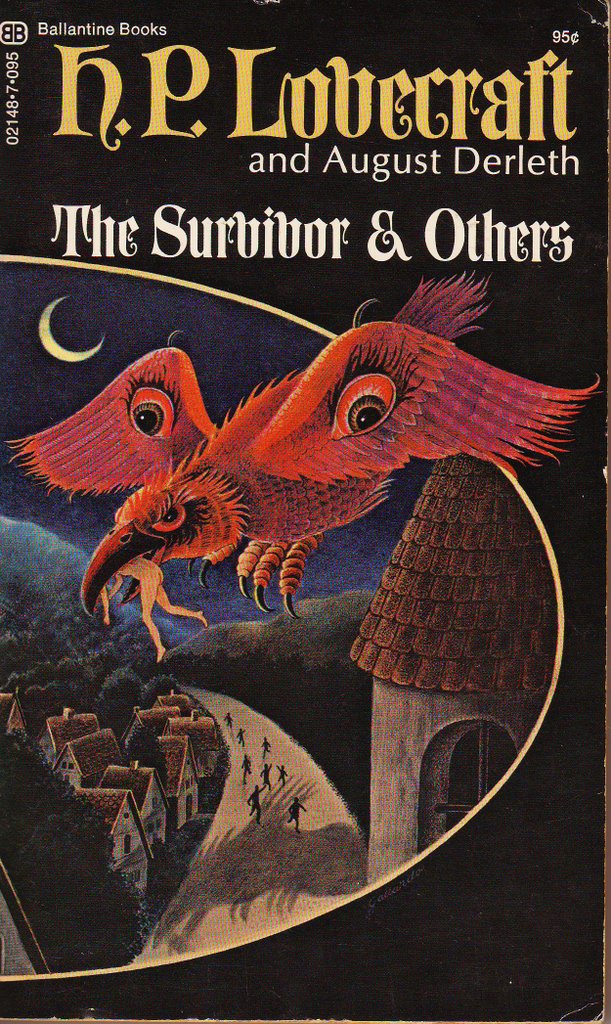
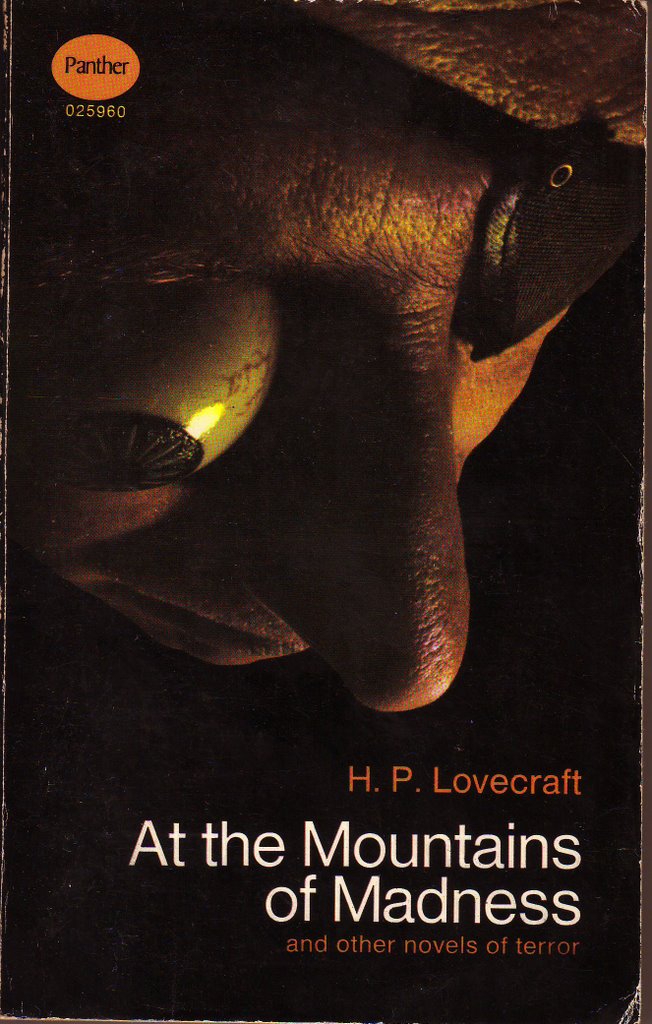
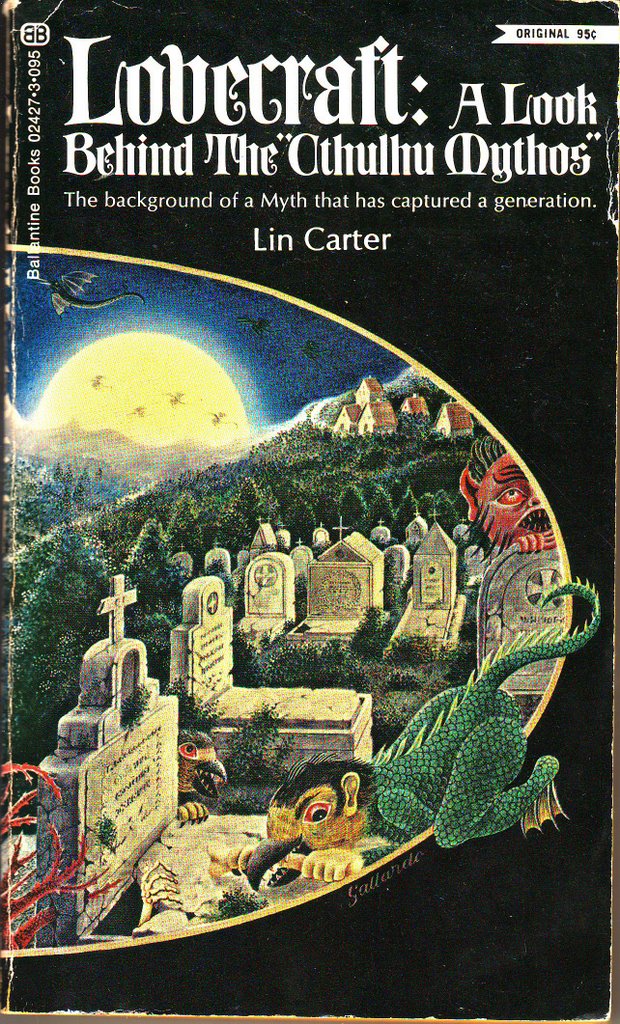
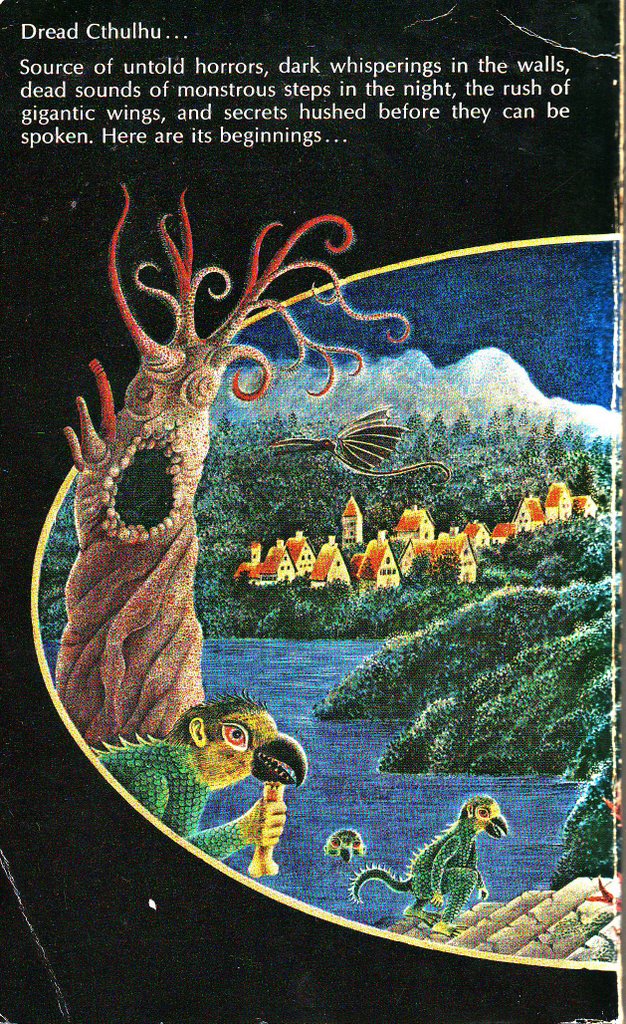
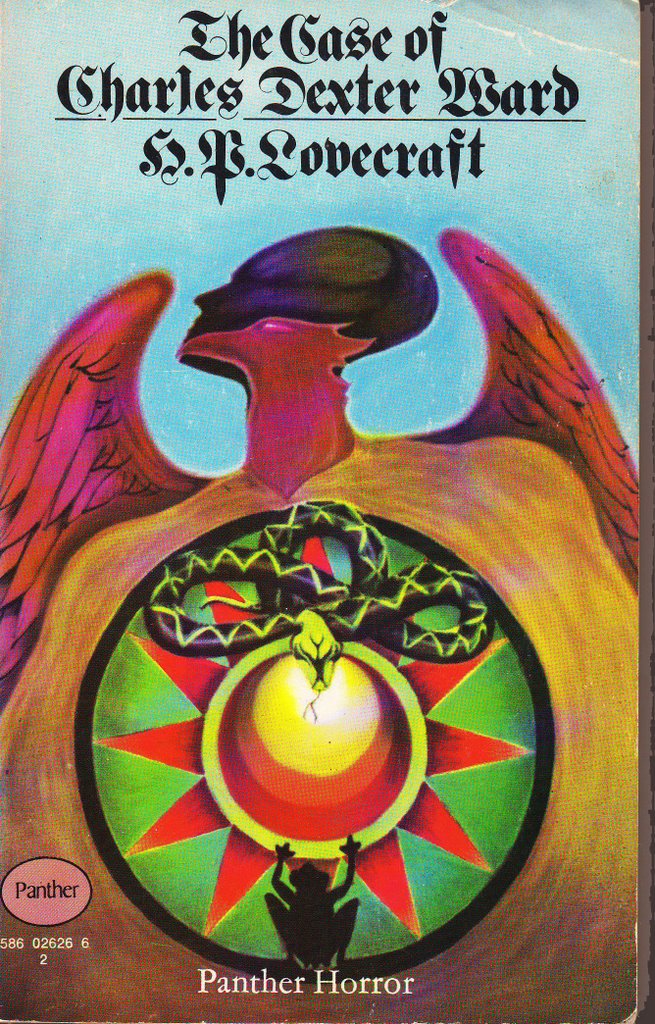
HP Lovecraft covers

Looking for information about the illustrator of many HPL paperback covers, Gervasio Gallardo, I ran across this site, which has dozens of HPL covers. Great stuff!

Friday, October 20, 2006

More Weird Covers


Eric Zann's Weird Covers

After reading Simon Reynolds article in this months Wire about 'hauntological' music, I found this delightful website, Eric Zann's Weird Covers, "a site devoted to the luridly inventive paperback cover art of the 60's and 70's". The covers have the same kind of appeal as the Nonesuch electronica and Italian prog record covers displayed on Woebot.

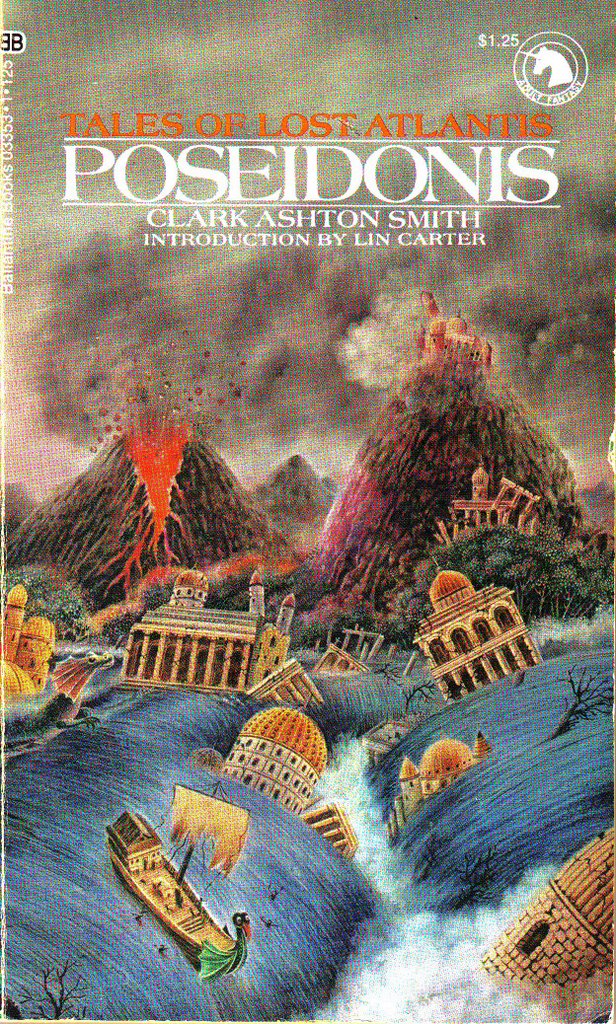
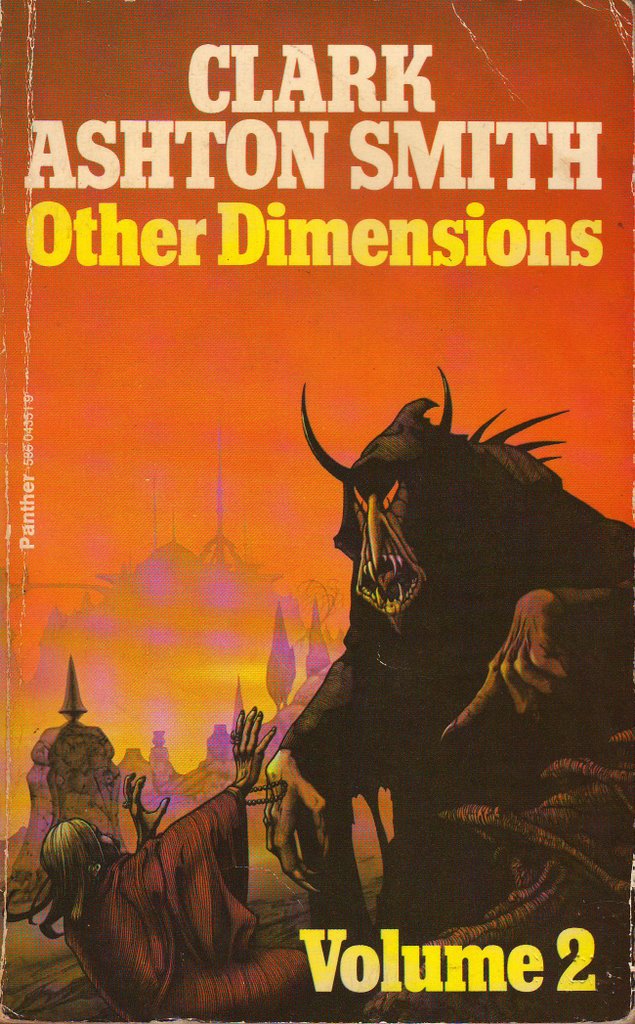
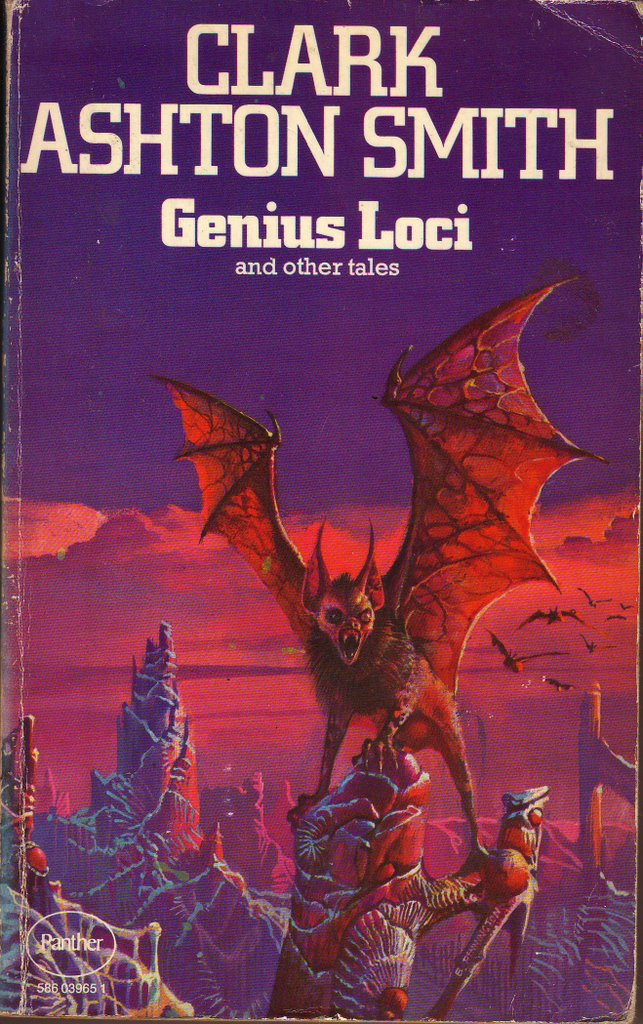
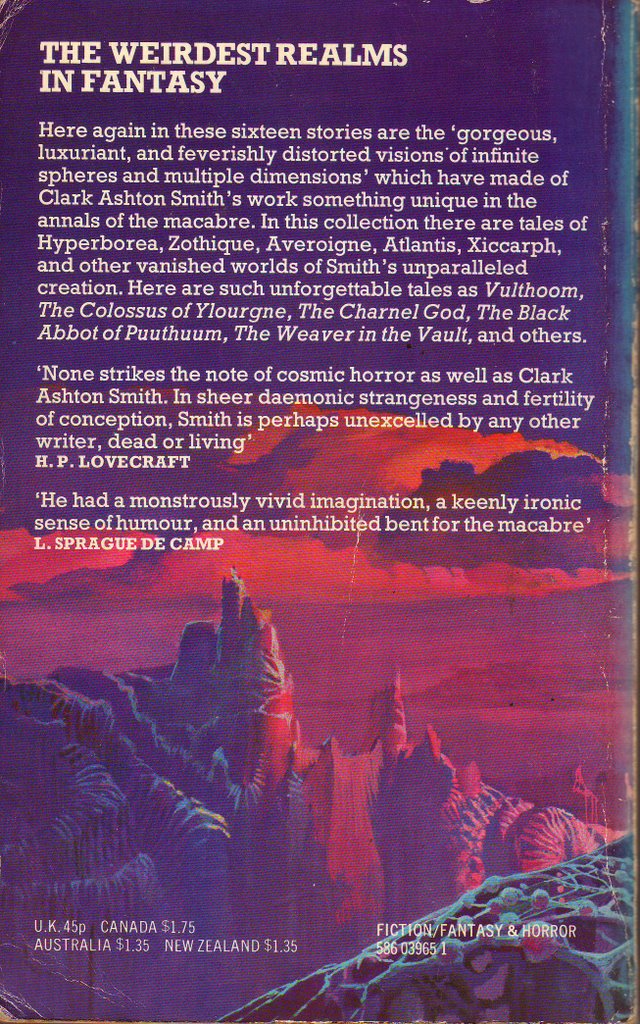
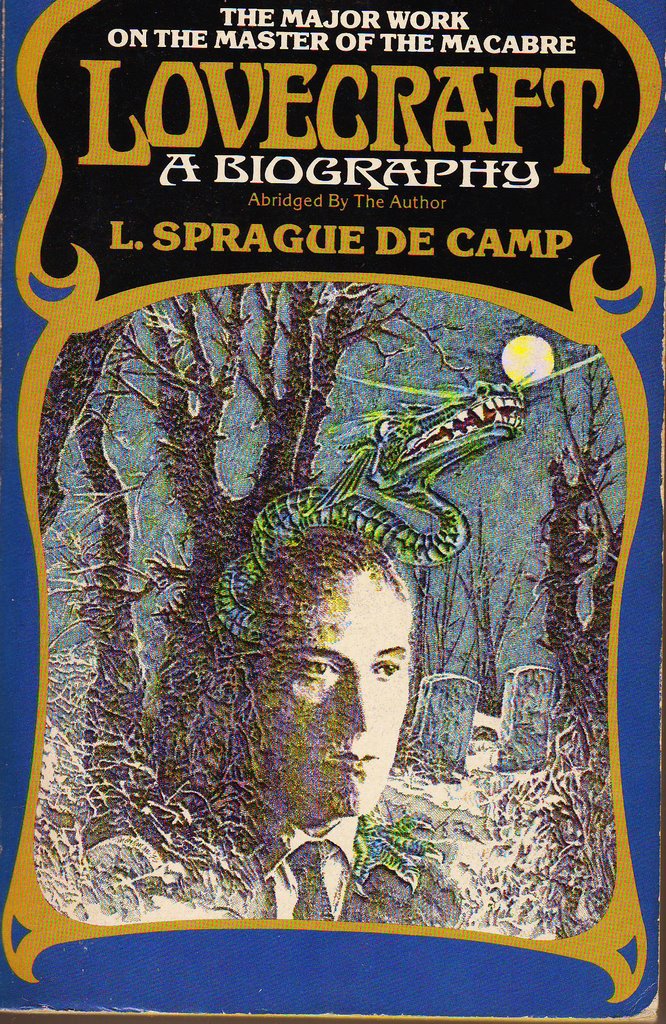
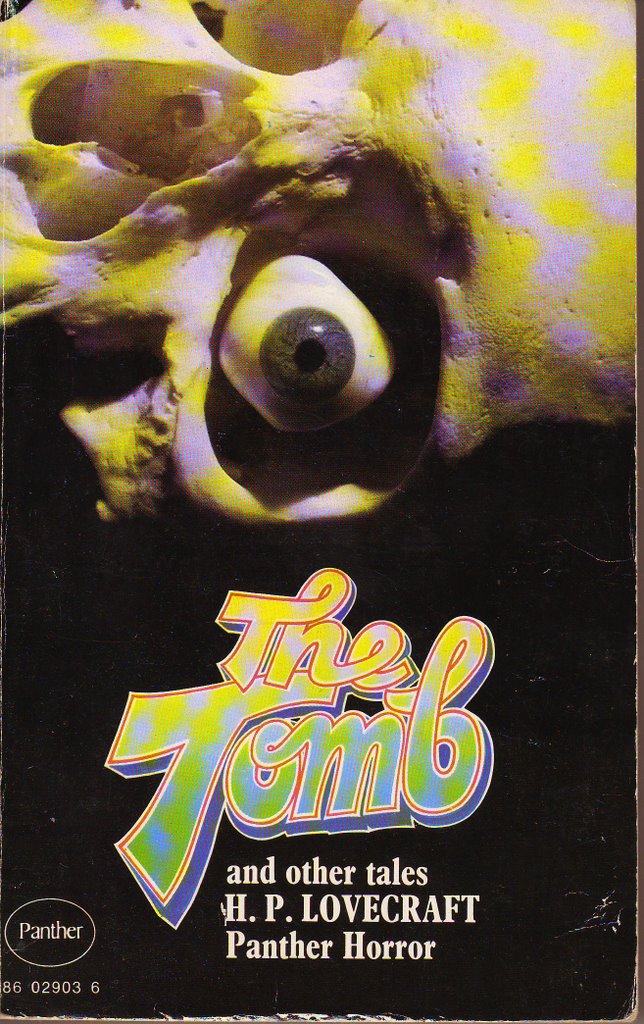
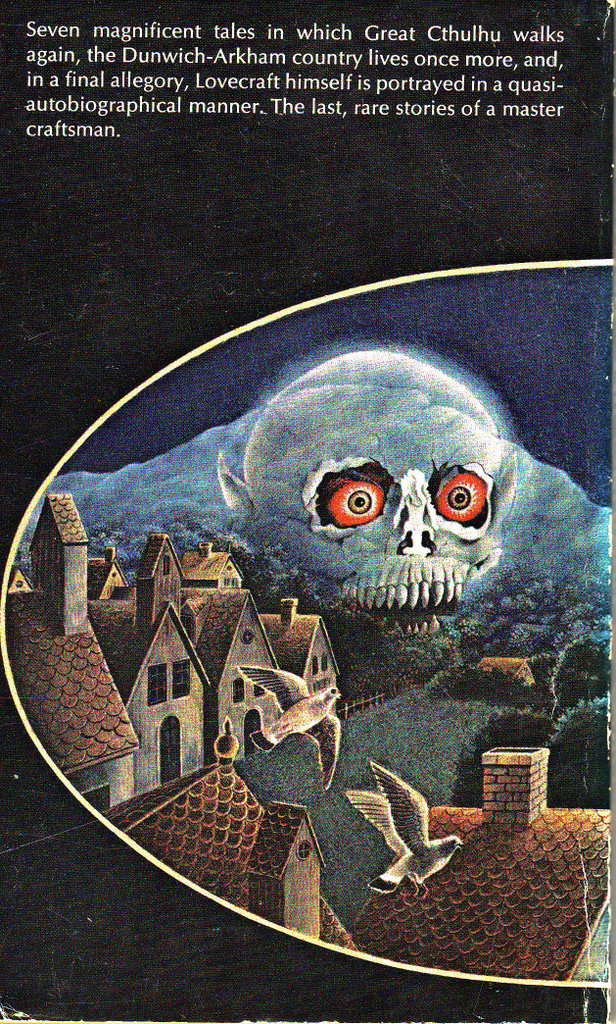
Here is part of my collection of '60 and '70 Lovecraftian paperbacks; more tomorrow!