Showing posts with label French Black Metal. Show all posts

Thursday, February 19, 2009

Moëvöt

What would the work of Jean Rollin have sound like, if he had had not been a cinematographer but a Black Metal fan?

Perhaps something like the shadowy French band Moëvöt.

In the sixties and seventies, French filmmaker Jean Rollin directed a series of obscure and odd art-horror films. Most of Rollin's films are charmingly amateurish, largely improvised, poetic vampire films. His aesthetic predilections ran counter to the Nouvelle Vague movement that dominated the French arthouse cinema of the era, as he was always more attracted to 'outmoded' traditional French cinema. The films are a strange amalgam of on the one hand an anachronistic form of Black Romanticism and and on the other hand exploitation cinema: his films feature declamatory speeches, 'theatrical' acting and 'poetic' tropes, as well as (sometimes crude) sex and violence. Jean Rollin's films are not successful as horror films (they are never truly frightening), but they succeed as filmic explorations of a Surreal, almost mythological and very personal iconography.

From the chapter on Rollin in Cathal Tohill and Pete Tombs 1994 book Immoral Tales. Sex and Horror Cinema in Europe 1956-1984:

"In the guise of a 'horror' film a series of unconnected images was being shown: women drinking from a huge jar of blood, a game of skittles played by a blind woman, a vampire queen emerging from the sea, a marriage of vampires taking place in the old Grand Guignol theatre, two lover being sealed inside a coffin... and so on, up to the final image of the hero, cradling his lover's body in his arms in the deserted Place de la Bastille, and reciting from ancient pulp author Gaston Leroux. To cap it all, the film was laced with splashes of nudity, ridiculous dialogue that seemed to be made up as the actors spoke, and had a cast who were killed off at the end of the first half hour and then came back to life for the final fifty-minute play-out. (...)

[Rollin's] films are based around images and sequences of images, not around the logical, point-by-point exposition of a screenplay. The genesis of many of is films is a particular place that catches his attention or a specific image. Other images then follow, and often the screenplay is an exercise in linking the pictures that come almost ready formed to his mind. (...) His ideal is to find images that are strong enough in themselves to need no final explanation. To him, the need to explain takes away the power of the images."


Moëvöt is the work of a French musician known only under the pseudonym Vordb Dréagvor Uèzréèvb. Very little is known about Vordb. Possibly his name was Stéphane Z, possibly he hailed from the (rather provincial) town of Bergerac in the Dordogne. What seems certain is that Vordb was one of the leading figures of a collective of Black Metal bands called 'Les Légions Noires' ('The Black Legions'). Moëvöt is likely to have been only one of Vordb's many projects, others being Brenoritvrezorkre, Dzlvarv, Susvourtre, Torgeist, Vzaeurvbtre, Dvnaèbkre and (the best-known) Belkètre.

It cannot be said with certainty how many demos Moëvöt brought out. Some internet sites list up to twelve demos, but only two demos can definitely be attributed to this project: Voryathre (1993) and the impossibly named Ézléýfbdréhtr Vépréùb Zùérfl Màzàgvàtre Érbbédréà (1994).

Why do I associate Jean Rollin's films with Moëvöt's music?

Certainly there's more to the association than the mere fact that both artists are French.

Perhaps it seems odd to compare Rollin's poetic, highly intertextual films to the extreme and sometimes primitive genre of Black Metal. But even if Vorbd was part of the Black Metal scene, the music on the Moëvöt demos is not Black Metal in strictu sensu. Grimly buzzing guitars and blast-beating drums are conspicuous in their absence. Underlining this absence, we find choir-like singing, melancholic acoustic guitar chords, macabre Carnival of Souls-like organ playing, and extremely cinematic 'found sounds' of footsteps, children, church bells, birdsong. The only Black Metal element in the music are the agonized, rasping vocals, which are used only sparsely. If Rollin's films were explorations of a Surreal and very personal iconography, Moëvöt's music travels into the intimacy of Vordb's idiosyncratic musical-mental landscape.

One of the reasons I associate Rollin's films with Moëvöt's music is that there is something anachronistic about Moëvöt's Black Romanticist music. Both Rollins films and Moëvöt's music tap into "... the revolutionary energies that appear in the 'outmoded' - in the first iron constructions, the first factory buildings the earliest photos, objects that have begun to be extinct, grand pianos, the dresses of five years ago, fashionable restaurants when the vogue has begun to ebb from them." (Benjamin). The sex and violence in Rollin's films relate to their outmoded context as the Black Metal vocals relate to the other elements of Moëvöt's music.

Both Rollin and Moëvöt worked under severe budgetary constrains, but manage to turn this to their advantage: Rollin by harnessing the energies that emerge in the 'outmoded', Moëvöt by using the primitivity of the recording technology to explicitly introduce "...the technical frame, the unheard material pre-condition of the recording, on the level of content." (K-Punk)

Like the films of Jean Rollin, the music of Moëvöt is charmingly amateurish and largely improvised. The music lacks rhythm, structure, development. The music is based around musical motifs and sequences of motifs, and not based on a logical composition. One senses that for Moëvöt, the power of the motifs would be taken away if they were to be integrated into a conceptual construction.

I end this post with the juxtaposition of two YouTube videos of Moëvöt's music with the same number of trailers for Rollin's films. This collocation of videos is strong enough in itself to obviate the need for any further rationalization.

It is time to sleep, perchance to dream.


In einem Friedhof - Errance (Moëvöt)


Le Frisson Des Vampires
(Jean Rollin, 1971)


Zurghtapre-Chant d'Eternité I (Moëvöt)


La Rose De Fer
(Jean Rollin, 1973)


Post scriptum

This is the 400th post of this blog. The very first post was published on August 14th, 2006. It announced: 'This blog has been inspired by my visit to the exhibition "Undercover Surrealism" at the Hayward Gallery in London. The blog is intended to contain doctrines, fine arts, ethnography, variety. Expect dusty things, ethnographies of one-man-Cthulhu Cults, confused concepts, black and blackened musics, untruths.'

Sunday, February 15, 2009

Black Metal Sound Poetry

I


Ervoelbtre

Vermyapre Zuerkle Uatre
Kloarbe Vurtrue Zuerkle Goebtre
Aaprab Vergz Varbadre
Berv Tre Mve
Eakre Uatre Zurgtapre
Uatr Borvuatre Zuerkle Droer


These words are not the work of a forgotten Dadaist or Futurist of the interwar period - they are the song titles of French Black Metal band Brenoritvrezorkre's 1995 demo Ervoelbtre.

Brenoritvrezorkre was only one of many impossibly named French Black metal bands of the mid-nineteennineties: others are Dzlvarv, Dvnaèbkre, Moëvöt, Vzaéurvbtre, Vrepyambhre, Vagézaryavtre, Mveprebrartre, Eëtheryarkluatre, Mavbtreëh and Norzbgorobtre, to name a few. They were part of a shadowy group of bands collectively known as 'Les Légions Noires' ('The Black Legions').

These strange band names and song titles can be said to form part of a long underground tradition, that of the carnivalization of speech. As I've written before, Black Metal is a carnival genre, a genre of destruction and uncrowning. In Black Metal, the good is dethroned in favor of it's opposite - both in a moral-ideological sense (evil) and in an aesthetic sense (bad in the sense of ugly). The strange song titles and band names of 'Les Légions Noires' can be appreciated as carnival language. In his classic 1965 study Rabelais and his world, Russian philosopher and literary theorist Mikhail Bakhtin writes:

"One of the popular forms of comic speech was the so-called coq-à-l'âne, "from rooster to ass." This is a genre of intentionally absurd verbal combinations, a form of completely liberated speech that ignores all norms, even those of elementary logic. The forms of verbal absurdities were widespread during the Middle Ages. (...) In a period of the radical breaking-up of the world's hierarchical picture and the building of a new concept, leading to a revision of all old words, objects, and ideas, the coq-à-l'âne acquired an essential meaning: it was a form which granted momentary liberation from all logical links - a form of free recreation. It was, so to speak, the carnivalization of speech, which freed it from the gloomy seriousness of official philosophy as well as from truisms and commonplace ideas."

Genealogically, one can link the Medieval coq-à-l'âne to the Renaissance works of Rabelais, to Paul Scheerbart, Christian Morgenstern, Lewis Carroll, Pétrus Borel, Molière, Quirinus Kuhlmann, the Russian and Italian Futurists, and the Dadaists - and from there to 'Les Légions Noires'. Black Metal has the most unexpected antecedents.

Nevertheless, it must be said that Bakhtin's reading of the coq-à-l'âne is rather more optimistic and emancipatory than the rather macabre, terrifying tone of the Black Metal of 'Les Légions Noires'. In spirit, the carnival speech of these French Black Metal bands is closer to the tragic modernist grotesque than to the comic Rabelaisian grotesque.


II

If one focuses on the acoustic sensation produced on the ear by the strange combinations of vowels and consonants of these band names and song titles, one senses that they have an insidiously powerful feeling-tone. The acoustic sensation suggests the darkness of Transsylvanian tombs. The band names sacrifice logopoeia (meaning) to phonopoeia (sound value); they are a rot of referentiality in the stinking soil of sound. But even among these pseudo-primitive sounds, one finds words which suggest French originals: 'Vermyapre' clearly sounds like 'Vampyre'. It is these words which give a tension to the band names and song titles which is absent from 'pure' sound poetry.

The names and titles have not transcended meaning, they have transgressed it, and inhabit the border zone between language and that which is beyond language.


Post scriptum

This Les Légions Noires Journal on Last FM states: "What is the language they use? The language is called Gloatre and was entirely created by Vordb. Know that Gloatre does NOT contain umlauts, the word Moëvöt is not Gloatre since the project existed before Les Légions Noires. We suppose that Gloatre is based on French language and the aesthetic of the letters, hence you can’t really translate it. The easiest word might be Vérmyapre which means vampire. Vérmyaprèb is plural." Note that I cannot vouch for the accuracy of this statement.

Surprisingly, Jahsonic hasn't posted yet about Mikhail Bakhtin's Rabelais and his world (there is a big article on the Art and Popular Culture Wiki, though). Jan, Bakhtin's birthday is November 17th, so perhaps you should aim for the day of his death, which is a lot closer: March 7th.

Wednesday, February 11, 2009

Brenoritvrezorkre - Four Demos

I

Death is not an instantaneous act; it implies a lasting transition which is terminated only when the dissolution of the body has ended. Between the moment of expiration and the moment all rotting flesh has disappeared, lies the period during which corpses are dangerous, polluting, contagious. The dead do not go to the land of souls until they are without flesh, and until they are without flesh they haunt the living like guests who have outstayed their welcome. But not only the spirit of the deceased is dangerous: until the corpse has decomposed completely, it is particularly vulnerable to the attacks of evil spirits and all the harmful influences by which man is threatened.

The intensity of the dangerous, polluting and contagious qualities of the corpse can be represented by a parabola. When the deceased has died recently, outward forms of decomposition are not yet visible, and the body is still retaining its form. As the corpse starts to rot, and the physical identity of the dead person slowly becomes formless, the taboos with regard to the corpse become stronger. The danger, pollution and contagion are at their apex - or should I say: nadir - when the corpse has become viscuous, unstable but not yet fluid, soft, yielding and compressible, sticky, clinging. After that point, the formlessness slowly treacles away to reveal the whiteness of the bones, the architectural, almost monumental structure of the skeleton. When the skeleton is clean, all danger has subsided.

The funerary rites of many cultures serve to prevent the apex being reached, by mummifying or embalming the corpse so that it does not become formless: think of the ancient Egyptian or contemporary American funereal practices. Other cultures attempt to avoid the apex by short-cutting the transitional period: cremation is one example of such a practice, the necrophagic endocannibalism which was practiced by some Australian Aboriginal and Dayak tribes is another.


II

Les Légions Noires ('The Black Legions') were a group of Black Metal bands which were active in France between 1993 and 1996. Mütiilation, Belketre, Torgeist and Vlad Tepes are the best known of these bands.

Emulating Norwegian Black Metal pioneers such as Mayhem, Burzum, Ulver and Darkththrone, the French LLN Black Metal bands aimed for a production style which was metaphorically called 'necro': very lo-fi, cold- and thin-sounding, blown out, in the red. The sound recording style mimicked the decay of the corpse.

Of all LLN bands, the shadowy and impossibly named band Brenoritvrezorkre ventured closest to the most dangerous, the most polluting, the most contagious point in the process of rotting. The four demos which the band released over the course of 1995 and 1996, contain music that is unstable, viscuous, formless. They are amongst those rare albums which seem to exude a smell, a stench (Mayhem's De Mysteriis Dom Sathanas is another one). Listening to the music, one fears the aural dirt might rub off onto one's inner ear, tainting forever the pleasure of listening to music. Like the dead who are not yet without flesh, the decayed sound of Brenoritvrezorkre can haunt its audience - it is certainly haunting me at the moment. But not only Brenoritvrezorkre itself is dangerous: it has opened the gates for other baneful musical spirits such as those of Maurizio Bianchi and Abruptum.

Angelic spirits seem far away: far off is the aestheticizing of decay by William Basinski in his 'The Disintegration Loops I-IV': a series of albums which presented music constructed from withering magnetic material - but pure, consonant, beauteous, majestic, angelic, ethereal music. In a sense, Basinski takes an idealist, utopian, redemptive position with regards to decaying sound recordings. Other than Brenoritvrezorkre, Basinski's music is the product of Hegelian trancendentalism. Thus, Basinski's music is the antinomy of Brenoritvrezorkre's Black Metal. For Brenoritvrezorkre is the darkness of earth where bodies rot, for Basinski the luminosity of the heavens.

I hear Brenoritvrezorkre's music as haunted by the earliest work of Industrial music pioneer Maurizio Bianchi. Bianchi, using the moniker 'Sacher-Pelz', released four compelling C60 cassettes in 1979 and 1980: Cainus, Venus, Cease To Exist, and Velours. From Jim Haynes' review in The Wire 216: "With what appears to be a homebuilt set-up of multiple tape machines, a turntable and a few simple electronic devices, Bianchi abused his vinyl collection of Kraftwerk, Neu!, Morricone soundtracks and unidentified disco tunes to arrive at a mutilated version of monotonous loops and varyspeed warble. What little references to Autobahn that could be heard had been disfigured and corroded as if the sounds themselves had been exhumed from a lengthy burial in a murky swamp." Brenoritvrezorkre sounds like what Sacher-Pelz would have sounded like had Bianchi not abused "...his vinyl collection of Kraftwerk, Neu!, Morricone soundtracks and unidentified disco tunes..." but a vinyl collection of Mayhem, Darkthrone and Abruptum and unidentified early-nineties Norwegian and Finnish Black Metal albums. The music exudes the same sense of misanthropy, inner turmoil, existential frustration and boredom. Boredom? Yes, like Bianchi's repetitive tape loops, Brenoritvrezorkre is boring - but it's not the boredom of endlessly regurgitated clichés and stereotypes, it is boring like the work of the Marquis de Sade. In the works of Sade, Bianchi and Brenoritvrezorkre the musical or literary elements are repeated excessively, like a litany, like a mantra, until the referent is empty. Brenoritvrezorkre presents the pleasure of an agitated ennui.

Rather than from the three main mythological ancestors of Black Metal - Mayhem, Burzum and Darkthrone - Brenoritvrezorkre seems to have descended from the decentered and destructured Black Metal of the Swedish band Abruptum. There is the same sense of the absurd about the music, the same ugliness and clumsiness, the same retarded anti-aestheticism - even if Brenoritvrezorkre plays a lot faster than Abruptum. But where Abruptum's albums present 'neutral, transparent' field recordings of transgressive performance art actions, Brenoritvrezorkre foreground the opacity and materiality of music as a recorded artifact. Unlike Abruptum, the spectre of Brenoritvrezorkre is textural, explicitly introducing "...the technical frame, the unheard material pre-condition of the recording, on the level of content." (K-Punk). The decay of recording technology: that is the very essence of Brenoritvrezorkre.

Brenoritvrezorkre seeks out the point at which all the rot, and all the harmful influences of rot, are at their most intense. Their music is revolting.


Post scriptum

You can find Brenoritvrezorkre's four demos here, at the consistently interesting Cosmic Hearse blog.

When will the LLN corpus be exhumed for a proper rerelease? Southern Lord, do for the LLN bands what you did for the early Abruptum tapes!

The four Sacher-Pelz tapes were rereleased on cd in this beautiful box in 2001 in a limited edition of 480: one of these is the pride and joy of my record collection. The box will be rereleased by Menstrual Recordings.

Saturday, February 16, 2008

Spektr - Mescalyne

In 1963, author and poet Henri Michaux participated in the making of a documentary film on mescaline, "Images du monde visionnaire":


The film was produced by Laboratoires Sandoz, the company for which dr. Albert Hofmann worked when he discovered LSD by accident in 1938, and it was directed by Eric Duvivier. The film's intended audience was the medical profession. In an essay on that film ('Tempo de l'infini turbulence'), artist Jean-Jacques Lebel writes that Duvivier had never taken mescaline himself. Michaux felt the film did not adequately reflect the psychedelic experience, and created a spoken word introduction to the film which subtly undermines it.

Here, I translate part of that introduction.

"When it was proposed to make a film about mescaline hallucinations, I have declared, I have repeated and I repeat it again, that that is to attempt the impossible.
Even in a superior film, made with substantial means, with all one needs for an exceptional production, I must state beforehand the images will be insufficient. The images would have to be more dazzling, more instable, more subtle, more changeable, more ungraspable, more trembling, more tormenting, more writhing, infinitely more charged, more intensely beautiful, more frighteningly colored, more aggressive, more idiotic, more strange.
With regard to the film's speed, it should be so high that all scenes would have to fit in fifty seconds."

For the title track of their "Mescalyne" ep, French industrialized Black Metal band Spektr have sampled this very text. In using this specific sample, they raise the bar on themselves. Is their music "...more aggressive, more idiotic, more strange..." or is it "insufficient"?

In his writings on drugs Michaux writes that 'interruptions of consciousness' are characteristic of the mescaline experience. Such interruptions are echoed in the musical structure of Spektr's ep: Industrial Ambient and highly charged, aggressive and tormenting Black Metal alternate abruptly, as in the abrupt switching on and off of consciousness, as in sudden neuronic polarizations of depolarizations. The timing and dynamic of these alternations is irregular, prompting some reviewers to complain about a lack of composition. I do not agree: I believe the irregularities are intentional. I believe these irregularities purposefully mimic Michaux's description of the mescaline experience - or the mescaline experience itself.

Mescalyne is not "...more frighteningly colored...". Rather, it is a stark black and white, like their previous album "Near Death Experience". I had hoped that Mescalyne would continue down the path struck out by "Near Death Experience", which refers to musical idioms beyond Black Metal's narrow boundaries. I had hoped that - where "Near Death Experience" already incorporated funky, jazz-inflected drumming - Mescalyne would turn into a full-blown rhizomatic Black Metal, with Ambient, World Music, Jazz and Dubstep, mixed together with street noises, radio static and the sound of war into a blackened and surreal sound collage. It was not to be: Mescalyne is a little (though not much) more conventional than "Near Death Experience".

That is not to say that Mescalyne is "insufficient" - far from it! Spektr is a Sielwolf for the naughties and Mescalyne is "intensely beautiful". I especially love it's Ambient: it sounds as if Montague Rhodes James's chosen medium was music instead of story, and as if he had personally lived through the horrors of the 20th century instead of the gen
teel and sheltered world of 19th century King's College, Cambridge. "Malevolence and terror, the glare of evil faces, 'the stony grin of unearthly malice', pursuing forms in darkness, and 'long-drawn, distant screams', are all in place...". Recommended!


Post scriptum

Here is a post on the ever-excellent Ombres Blanches blog about "Images d'un monde visionnaire".

Monday, January 28, 2008

Aluk Todolo - Descension

The title of instrumental Occult Rock cabal Aluk Todolo's debut album 'Descension' is the title of John Coltrane's watershed album "Ascension" turned upside down ... like a Satanic cross.


Aluk Todolo hails from France and is comprised of members of two Black Metal bands: Diamatregon (who put out their debut album, "Blasphemy For Satan" on tUMULt) and Vediog Svaor. Said to be recorded in a cave in the Alps, "Descension" was produced by none other than James Plotkin (Old, Phantomsmasher, Khanate, Khlyst).

Most reviewers of 'Descension' focus on that album's Krautrock inspiration, referencing Can, Faust, Harmonia. Other writers point to Post Punk influences: This Heat, even Einstürzende Neubauten - and all these writers are entirely justified in doing so. I need not repeat these readings of 'Descension' here. Certainly, references to these Post Punk and Krautrock band are more appropriate than references to Coltrane's monumental "Ascension", as there is no overt Jazz influence audible in Descension's blackend sound world. And - though Aluk Todolo's album is astonishing - it would be foolish to compare them to Coltrane on a strictly artistic level.

But what about the significance of the album's title - 'Descension'? There are signifyers one cannot use without calling forth ghosts ... like using the word "summer" in an album title risks evoking the restless spirits of the Beach Boys. Referencing "Ascension" in the context of Aluk Todolo's music is a little like a Black Metal band naming it's album "A Hate Supreme". Is the music of Aluk Todolo's debut an inversion of John Coltrane's?

The lettering of the band's name on the album's cover art certainly points towards an inversion: all are upside down. So let us see whether a web of significance can be spun between "Ascension" and "Descension" by analyzing the one as an inversion of the other.

Where Coltrane's "Ascension" was produced by a big band (10 musicians!) and seems to ascribe to a "more is more" aesthetic, "Descension" is the creation of a power trio (bass, drums, guitar) and staunchly minimalist.

Coltrane's "Ascension" is improvised, expansive and free: the saxophonist "..de-contextualised and fragmented the orthodox syntactical elements of jazz, viz. tempo, rhythm and pulse, harmonic progressions and set "changes", keys and tonal centres..." (sourced here). Where "Ascension" is improvised, expansive and free, "Descension" is the opposite: it is composed, tight and controlled. The drums rhythms are so simple and lo-fi as to be almost almost skeletal, a far cry from Rashied Ali's multidirectional, near-chaotic drumming; the bass is a monomanically pulsating mantra; and even the guitar noise - though very psychedelic, sometimes rumbling, sometimes roaring, at times grating and abrasive - seems almost to be electronically programmed.

A cross is still a cross, even if it is turned upside down. Both Aluk Todolo and Coltrane's music are oriented towards an ecstatic mysticism.

The band's name points towards the Eastern philosophy John Coltrane was so very much interested in: Aluk Todolo is the name of the religious tradition of the Toraja people, polytheistic animists who live in the mountainous region of South Sulawesi, Indonesia. But where Coltrane was open to all the world's cultures because he was an inclusionary humanist, Aluk Todolo uses the intercultural reference to send an anti-enlightenment message. And where Coltrane, in Freudian terms, was animated by the 'pleasure principle', Aluk Todolo is propelled by a 'death drive': the Toraja people is famous for their elaborate funeral rites and their burial sites carved into rocky cliffs.

Coltrane was very much interested in the Yoruba religion, in which Afro-American divinities enter the body of the priests consecrated to that spiritual being. Furthermore, Ascension's playing style is a sort of glossolalia - speaking in tongues, ecstatically possessed by the Holy Ghost. Likewise, in a Terrorizer interview Aluk Todolo's spokesman said that the album "...was recorded during summer 2006 in the Alps, in a cave. There, what lurks between the folds of the audible can become real. We started recording at dusk, exhausted after several hours of invocation. When we finally disappeared behind the forces we summoned, we reached the conditions to record 'Descension'." Disappearing behind spiritual beings doubtlessly refers to possession. Both Coltrane's band at the time "Ascension" was recorded, and Aluk Todolo can be described as trance possession cults. But where Coltrane strove to incarnate a God who is "A Love Supreme", Aluk Todolo channels malicious, hateful spirits.

Where the spiritual nature of "Ascension" is essentially optimist, presenting an ecstatic yearning for a better world, for the Kingdom Come, "Descension" points downwards, towards an acephalic and ruined society, towards an abyss abandoned by God. Descension's beautiful album cover art is an apt symbol of that: it is a black and white photograph of a headless, broken and weathered statue of the Buddha or an Eastern deity set against an old brick wall.

Aluk Todolo's "Descension" is a withering lotus flower, it's leaves falling in mesmerizing stop-motion.


Post scriptum

Aluk Todolo's 'Descension' is not the first album to invert Coltrane's "Ascension": Stefan Jaworzyn's eponymous noise rock band is (more explicit) example. Yet another might be "Descension" by Yellow Swans (an album I haven't heard).

Here is an Italian-language interview with Antoine Hadjioannou, the band's drummer (link).

I can see where the references to This Heat comes from - but, given their band name, I'd like to see them explore ethnopsychedelic montage, to write an 'Urban Gamelan' or a 'The Gospel Comes To New Guinea' (23 Skidoo) for the 21st century.

Friday, August 17, 2007

Deathspell Omega - "Fas - Ite, maledicti, ite ignem aeternum"

Many Black Metal bands seem to take the most-quoted line of 1994 film Pulp Fiction's Marsellus as their motto: "I'm gonna get medieval on your ass". Their aesthetic reflects the view that the medieval period was a time of drafty castles with dank dungeons, plague, poverty, torture, witch hunts, brutal kings and wall-to-wall ignorance; and true to form, Black Metal inverts the negative value attached to that era's supposed primitiveness and brutality, extolling exactly those qualities.

Black Metal band Deathspell Omega aesthetic is far from medieval - the French band's motto is rather: I'm gonna get Baroque on your derrière"!

Not that Deathspell Omega's music is dominated by the contrapuntal style, as Baroque music was.

Rather, their new album - the extravagantly titled "Fas - Ite, maledicti, ite ignem aeternum" - employs sophisticated musical techniques to create exaggerated motion and clear detail, producing drama, tension, exuberance, and grandeur - exactly like Baroque visual art and sculpture. Deathspell Omega's music is characterized by the juxtaposition of blastbeat fury and chaotic riffing to complex, atypical rhythmic structures, stop/start dynamics and angular, dissonant riffs; by great drama, rich deep color, and intense light and dark shadows. There's something of Caravaggio in the best parts of the album - the painter about whom a contemporary cardinal's secretary wrote: "In (his) painting there are but vulgarity, sacrilege, impiousness and disgust... One would say it is a work made by a painter that can paint well, but of a dark spirit, and who has been for a lot of time far from God, from His adoration, and from any good thought...".


Like Baroque visual and architectural art, Deathspell Omega's music is quite bombastic, sounding like a monument in sound, using it's absolutist authority to impose obeisance and fear. The band transform the racial elitism, which is so prevalent in NSBM, into an intellectual elitism. In fact, if one reads the reviews on sites like Encyclopedia Metallum, Black Metal fandom seems to be a little intimidated by the complexity of the music as well as by the obscure, even hermetic language in which the band cloaks it's Satanic theology - like a Lacan of the occult.

Deathspell Omega is on a 'mission civilatrice'. However savage the riffing may be in places, overall the music is intelligent, sophisticated, intricate; there is a measure of artificiality - in the positive (anti-"authentic") sense of the word; a sense of "good taste"; ecclesiastical decorum, even. Unlike many Burzum-inspired and neo-pagan Occidentalist Black Metal bands, Deathspell Omega do not disavow culture. On the contrary, Deathspell Omega embraces learnedness and the places of learning: the library, academia, the city. Thus, the band seems to share Baudelaire's “ivresse religieuse des grandes villes”.

The afterlife plays a prominent role in Deathspell Omega's aesthetic - first of all, in the title of the cd. Wikipedia states erroneously that the album's title derives from the comical medieval morality play Everyman - a play which is not even in Latin. Rather, the title derives from chapter 25 of the Gospel of Matthew, in which Jesus foretells the Last Judgment. From the King James Bible: "Then shall he say also unto them on the left hand, Depart from me, ye cursed, into everlasting fire, prepared for the devil and his angels".

Deathspell Omega's conception of the infernal afterlife is also post-medieval. Hell is not portrayed as a place of torture: no branding irons, cooking pots full of boiling oil, tongs, pliers and blacksmith's tools for these Frenchmen. In Deathspell Omega's hell, it is the soul rather than the flesh which suffers torments or experiences ecstasies. The void of Nirvana is about as far off as Satan's medieval torture chamber. As Roger Caillois points out in his essay 'Métamorphoses de l'enfer', such a conception of Hell arose after the Middle Ages.

And let us not forget that the Baroque was also the period in which Milton published his magnum opus "Paradise Lost", which presents Satan sympathetically: as a rebel both tormented by and proud about his isolation from a tyrannical God. In "The Marriage of Heaven and Hell", the poet William Blake wrote: "The reason Milton wrote in fetters when he wrote of Angels & God, and at liberty when of Devils & Hell, is because he was a true Poet, and of the Devil's party without knowing it". In secularized modern France, Deathspell Omega can flaunt that they are of the Devil's party; still, their Satanism is a Miltonian challenge by Satan of the Omnipotent.

Theatrical, daring, enigmatic and fascinating, I can recommend any music aficionado to throw himself body and soul into Deathspell Omega's "everlasting fire".


Post scriptum

See the comments for a remark regarding my unfair dismissal of Wikipedia.

Saturday, June 16, 2007

Some French Black Metal YouTube vids

Spektr - Near Death Experience


Deathspell Omega - Carnal Malefactor (from the cd 'Si Monumentum Requires Circumspice')


Antaeus - Blood War III


Mütiilation - My travels through sadness, hate & depression


Blut Aus Nord - Mort Chapter 5

Monday, March 26, 2007

Automutiilation

"Unter friedlichen Umständen fällt der kriegerische Mensch über sich selber her," Nietzsche wrote in Jenseits Guten Und Bösen: "In peacetime, a warlike man maltreats himself".

Black Metal points towards Nietzsche's aphorism: it is a Metal genre in which both war and automutilation are extolled.

With regards to the warlike nature of Black Metal: entire books could be filled in an attempt to catalogue all Black Metal references to war. In fact, a subgenre of Black Metal is called War Metal, which fuels it's aggressivity with a speedball injection of Grindcore and Death Metal. Apparently, a Canadian (such a peaceful country!) band called Blasphemy pioneered the genre.

And automutilation and Black Metal? Again, the references in Black Metal to cutting one's own flesh are too numerous to mention. Mayhem's Dead cut himself. French Black Metal band Antaeus produced an album called "Cut Your Flesh & Worship Satan" which was supposed to be produced with a steel jewel box, containing instead of a booklet only a razor blade. MkM, the band's frontman, is an adept automutilator - a photograph of him accompanies this post.

And if Nietzsche's aphorism is true: does the current vogue for automutilation amongst teenagers imply that an especially warlike generation is growing up? And if we reverse the aphorism, can we assume that those who maltreat themselves in peacetime, are the cruelest ones in war?

Friday, December 22, 2006

Blut aus Nord

Continuing the French theme of the last few posts, a review of French Black Metal band Blut Aus Nord's recent cd MoRT ...

A few posts ago, I proposed the idea that Black Metal has drunk deep from occidentalist wells - the term occidentalism referring to Buruma's and Margalit's hastily put together but interesting enough booklet on the western origins of antiwestern thought. In this post, I'll explore this idea a little further.

One of the characteristics of occidentalist thought is that it contrasts wild and rural landscapes with urban landscapes. The urban landscape is portrayed as an inversion of the values of the wild and rural landscapes. The urban landscape is associated with capitalist greed, soulless rationalism, vice, dishonesty, superficiality: the city is both a whore and an automaton. The rural landscape on the other hand is unselfish, spiritual, soulful, deep, pure and true. This vision of nature versus nurture has roots going al the way back to Tacitus' Germania and had some of it's ugliest proponents in the German nazi era.

In Black Metal, rural and wild landscapes, especially those of Norway, are highly significant. The cd cover art of Emperor's "In the Nightside Eclipse" features pictures of Norwegian landscape (one of a fjord and one of a ruined castle) and the lyrics of that album repeatedly portrays the lyrics' narrator in natural surroundings: "Beyond the great vast forest / Surrounded by majestic mountains / Dark rivers float like tears of sorrow / Frost submerge the holy ring of fire" or "As the Darkness creeps over the Northern mountains of Norway and the silence reach the woods, I awake and rise... Into the night I wander, (...) Under the moon, under the trees. Into the Infinity of Darkness beyond the light of a new day, into the frozen nature chilly, beyond the warmth of the dying sun. Hear the whispering of the wind, the Shadows calling... (...) I gaze into the moon which makes my mind pure as crystal lakes, my eyes cold as the darkest winter nights, by yet there is a flame inside". Many Black Metal bands subscribe to deep ecological or ecofascist beliefs: misanthropic, biocentric ideologies that put nature before man.Burzum's Varg Vikernes occidentalism is apparent when he states in a rather disgusting interview "Ironically, the only thing that can save mankind is a stream of pandemics, natural disasters and other human catastrophes, wiping out most of us. In fact, I think the catastrophe is inevitable - unless something drastic happens very soon, - and to be honest I even welcome it. The sooner this world order collapses the better. We don't even need to do anything for it to collapse in chaos. The best and only thing we can do is to get away from the tidal wave, and make sure the best amongst us survive, along with our Pagan culture. We can physically move away from the modern world and all its moral, physical, emotional, mental and spiritual decay and depravity".

Given that Black Metal despises the city, it is all the more surprising and original that Blut Aurs Nord presents urban Black Metal. Just visit Blut Aus Nord's unusual and interesting website (not completely up to date as their most recent cd is not yet included in the discography) and you will see why this strand of the Black Metal web is an urban strand: the site lets the visitor stray through a mazelike, somewhat futuristic but derelict city, vaguely Blade Runner-ish, with Piranesi-like subterranean vaults and Gothic churches, and sombre high rise buildings. Click on the oriental glyphs and be led astray in a decaying urban world, the Paris of a nightmarish future, light years from nature.

Blut Aus Nord's recent cd (MoRT, 'Metamorphosis of Realistic Theories) continues this urban atmosphere. No 'natural, spiritual simplicity' here, but academic intellectualism and philosophical concepts. No blastbeats and 'simple, authentic, rural' folk music but industrialized, complex, almost-IDM-like rhythms and mention of Webern, Ligeti and Stockhausen as sources of inspiration. And aren't academia and industry the epitomes of urban existence?

The way Blut As Nord uses guitars deserves special mention. In an interview with a German website, band member Vindsvall states "We have moved far away from every theory of harmony. This was the perfect way to work more modulations into the guitar sound. If one plays the guitar fast, one has no possibility to hear the last vibration of the sound. But there exactly began our work: we used these last vibrations, gave them a new tone". In an interview with a French website, band member Vindsval tells that they wanted to use the guitar like a piano, "with eight fingers on the neck to obtain the same variations on the different parts played simultaneously by each of the hands", and have started to work with a touch guitar to optimize such techniques. "This broadens enormously the possibilities on the harmonic level, and when you do away with the frets you even multiply those possibilities".

All this makes for a discordant, seasick, murky, disturbing, haunting album, an album of writing tentacles, as formless as a spider, an album that does not sound like it is composed but like it is emanated, emanated like a Victorian trance medium emanates a cloud of ectoplasm, an album that is " (...) part of the human body, external to it, unstable, sometimes soft, occasionally hard, from time to time vaporous, variable in volume, visible only in semi-darkness, making an impression on photographic emulsion, presents to the sense of touch a humid and slippery sensation, leaving in the hand a residue which, when dry, has under microscopic examination the appearance of epithelial cells, without odour or definite taste, in other respects fleeting and transient, whether projected or otherwise, of uncertain temperature, fond of music" (from the DaCosta Dictionary's entry on ectoplasm).

Tuesday, December 12, 2006

Faces of Paris

Visiting Paris, it was one of my goals to buy three cd's:
  • 'Presque Rien' by Luc Ferrari;
  • 'Barbara Chante Brassens et Brel' by the eponymous chanteuse; and
  • 'No Longer Human Senses - Et Fugit Interea Fugit Irreparabile Tempus'* by Spektr;
  • and write a post about it called 'Faces of Paris', the post's title being a riff on the notorious 'Faces Of Death' video nasties of the 1980's.

    The nexus of the post would have been Pierre Klossowski's 'Sade - My Neighbour', more specifically the chapter of that book on the Divine Marquis' relation to the French revolution, where Klossowski describes regicide as the killing of God by proxy. The post would have linked the three cd's thematically through:
    • the violent, sadomarxist, even selfdestructive aspect of existentialism, that philosophical movement of which Barbara was one of the figureheads (didn't Sartre write in his preface to Frantz Fanon's 'The Wretched of the Earth' that ".... by their mad fury, (...) by their ever-present desire to kill us, (...) have [the oppressed] become men"?);
    • the violent, regicidal aspect of the may 1968 Paris uprising, where 'Soyons cruels!' was one of the slogans and where De Gaulle was to play the role of sacrificial king; the uprising of which Luc Ferrari's 'Music Promenade' is a music concrete collage of field-recorded sounds; and
    • the sadean aspect of Black Metal, which needs no commentary here. "Les Hordes Noires", cruel deicides par excellence, would have been presented as the heirs of the Sadean regicidal revolutionaries.
    However, as I came down with the flue during the visit to Paris, I only bought Ferrari's cd, so this post will never be written. It is up to you, dear reader, to imagine it's shape from these contours.


    *The title of Spektr's cd is a paraphrase of Virgilius "Fast flies meanwhile the irreparable hour".

    Saturday, October 28, 2006

    Spektr - Near Death Experience

    A few posts ago, in a review of Xasthur's 'Subliminal Genocide', I called out for some "Striborg meets Stockhausen" music. Sometimes, such calls are answered: the sound of French Black Metal band Spektrs cd "Near Death Experience" roared back at my call, out of the dark abyss.

    The French Black Metal scene is a very active one: bands Blut aus Nord, Haemoth, Deathspell Omega, Mütiilation and their ilk have spilled a blot of the blackest ink on the map of Europe, centered on Paris.

    One of the salient features of many French Black metal bands is their comparatively intellectual orientation: where most black metal bands share metal's general anti-intellectualism, French black metal bands casually inject quotes of Georges Bataille into their interviews, and use obscure philosophical, occult and theological terms in their communications. Of course, the French have a reputation to keep up: 'Les Fleurs Du Mal', Baudelaire's towering floral hymn to Satan, still casts a shadow over these modern acolytes of the Dark One - not to speak of Baudelaire's progeny, from Lautreamont and Gérard de Nerval to Artaud and Bataille.

    Another salient feature of French Black Metal is it's orthodox satanism. With regards to Satanism it is interesting to see that recently Satanist Black Metal has started to use the language of fundamentalism. For example, from the website of Swedish Black Metal band Ondskapt: "To worship him is to obey a holy will, immortal in its very fundaments. Ondskapt make no compromise when it comes to religiousness. Our music is completely dependant on the beliefs of the band. The music and lyrics exist solely through our faith and NEVER vice versa!". Many Black Metal bands have started to call themselves 'Orthodox', a term that generally refers to conservative dogmatism and is often used for those strains of Islam that are connected to fundamentalist violence. Of course, that one of the most heretic and apostatic musical genres has started to call itself 'orthodox' is deeply ironic. Without doubt, this fundamentalist language is used because since it has become transgressive to use it, as fundamentalist religion has become identified with terrorism, violence and evil; and Black Metal absorbs everything that is transgressive into it's culture. Thus, the consequences of Osama Bin Laden's actions have reached even as far as Black Metal; and it might be said that the western romantic nihilism that has influenced the Al-Qaeda ideology (see Buruma & Margalits 'Occidentalism') has come full circle. Perhaps, if more terrorist attacks occur in the coming years and the identification of fundamentalism and evil grows stronger, the language of satanic religious orthodoxy will eclipse the language of fascism in black metal.

    Yesterday I bought French Black metal band Spektr's cd 'Near Death Experience', their second release.

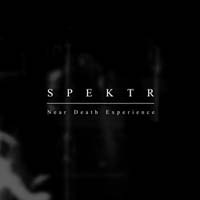
    It is not in itself the guitar playing or the vocals that make 'Near Death Experience' one of the most interesting recent albums in the Black metal genre: though somewhat slower, these resemble that of Haemoth on the Kontamination cd: cold, tinny, brittle yet fierce, harsh, trancelike (in fact, Haemoth is supposedly part of this band and in any case responsible for the vague but macabre black and white artwork of the Spektr cd cover).

    And it is not in itself the fact that Spektr uses sampling and programming as part of their Black Metal palette, that make me call 'Near Death Experience' a powerful experience of transnormal anguish: ever since Burzum's 'Filosofem', electronica has been part and parcel of the genre's instrumentarium.

    "What is it then? What is it? Tell us, Valter!"

    It is the sound design, those weird droney waves of sub-bass sound that haunt my subwoofer, making it walk trough the living room as if possessed. It is the fact that Hth's 'rythm anomalies' incorporate technically proficient and sometimes even funky jazz drumming: such an unusual combination of black and blackened musics. It is fact that Spektr lets film noir (very noir) ambience collide with the harshest and most icy of black metal blizzards in an unique way. It is the way "clicks and cuts", digital glitches, are treated with reverb and echo, making them sound as if they are overgrown with sickening, whitish fluffy mildew. It is the ectoplasmic ambient drone of short wave radio static ... the samples of voices which seem to have been weathered by the ages ... Basinski-like rotting tape loops, the aural exquivalent of old Victorian ghost photographs ... dusty and dirty ... grainy ... blurred, faded ... scratched, torn ... a Sadean Stockhausen's 'Aus Den Sieben Tagen'... Need I go on? Must I?

    It seems appropriate to end this post with a long samples of the first Chant de Maldoror:

    "Alors les chiens, rendus furieux, brisent leurs chaînes, s'échappent des fermes lointaines ; ils courent dans la campagne, ça et là, en proie à la folie. Tout à coup ils s'arrêtent, regardent de tous côtés avec une inquiétude farouche, l'œil en feu ; et, de même que les éléphants avant de mourir, jettent dans le désert un dernier regard au ciel, élevant désespérément leur trompe, laissant leurs oreilles inertes, de même les chiens baissent leurs oreilles inertes, élèvent la tête, gonflent le cou terrible, et se mettent à aboyer, tour à tour soit comme un enfant qui crie de faim, soit comme un chat blessé au ventre au-dessus d'un toit, soit comme une femme qui va enfanter, soit comme un moribond atteint de la peste à l'hôpital, soit comme une jeune fille qui chante un air sublime, contre les étoiles au nord, contre les étoiles à l'est, contre les étoiles au sud, contre les étoiles à l'ouest ; contre la lune ; contre les montagnes semblables au loin à des roches géantes, gisantes dans l'obscurité ; contre l'air froid qu'ils aspirent à pleins poumons, qui rend l'intérieur de leur narine rouge, brûlant ; contre le silence de la nuit ; contre les chouettes dont le vol oblique leur rase le museau, emportant un rat ou une grenouille dans le bec, nourriture vivante, douce pour les petits ; contre les lièvres qui disparaissent en un clin-d'œil ; contre le voleur qui s'enfuit au galop de son cheval après avoir commis un crime ; contre les serpents remuant les bruyères, qui leur font trembler la peau, grincer les dents ; contre leurs propres aboiements qui leur font peur à eux-mêmes ; contre les crapauds qu'ils broient d'un coup sec de mâchoire (pourquoi se sont-ils éloignés du marais ?) ; contre les arbres dont les feuilles mollement bercées sont autant de mystères qu'ils ne comprennent pas, qu'ils veulent découvrir avec leurs yeux fixes, intelligents ; contre les araignées suspendues entre leurs longues pattes, qui grimpent sur les arbres pour se sauver ; contre les corbeaux qui n'ont pas trouvé de quoi manger pendant la journée, et qui s'en reviennent au gîte l'aile fatiguée ; contre les rochers du rivage ; contre les feux qui paraissent aux mâts des navires invisibles ; contre le bruit sourd des vagues ; contre les grands poissons, qui, nageant, montrent leur dos noir, puis s'enfoncent dans l'abîme ; et contre l'homme qui les rend esclaves".