Showing posts sorted by relevance for query occidentalism. Sort by date Show all posts

Friday, December 22, 2006

Blut aus Nord

Continuing the French theme of the last few posts, a review of French Black Metal band Blut Aus Nord's recent cd MoRT ...

A few posts ago, I proposed the idea that Black Metal has drunk deep from occidentalist wells - the term occidentalism referring to Buruma's and Margalit's hastily put together but interesting enough booklet on the western origins of antiwestern thought. In this post, I'll explore this idea a little further.

One of the characteristics of occidentalist thought is that it contrasts wild and rural landscapes with urban landscapes. The urban landscape is portrayed as an inversion of the values of the wild and rural landscapes. The urban landscape is associated with capitalist greed, soulless rationalism, vice, dishonesty, superficiality: the city is both a whore and an automaton. The rural landscape on the other hand is unselfish, spiritual, soulful, deep, pure and true. This vision of nature versus nurture has roots going al the way back to Tacitus' Germania and had some of it's ugliest proponents in the German nazi era.

In Black Metal, rural and wild landscapes, especially those of Norway, are highly significant. The cd cover art of Emperor's "In the Nightside Eclipse" features pictures of Norwegian landscape (one of a fjord and one of a ruined castle) and the lyrics of that album repeatedly portrays the lyrics' narrator in natural surroundings: "Beyond the great vast forest / Surrounded by majestic mountains / Dark rivers float like tears of sorrow / Frost submerge the holy ring of fire" or "As the Darkness creeps over the Northern mountains of Norway and the silence reach the woods, I awake and rise... Into the night I wander, (...) Under the moon, under the trees. Into the Infinity of Darkness beyond the light of a new day, into the frozen nature chilly, beyond the warmth of the dying sun. Hear the whispering of the wind, the Shadows calling... (...) I gaze into the moon which makes my mind pure as crystal lakes, my eyes cold as the darkest winter nights, by yet there is a flame inside". Many Black Metal bands subscribe to deep ecological or ecofascist beliefs: misanthropic, biocentric ideologies that put nature before man.Burzum's Varg Vikernes occidentalism is apparent when he states in a rather disgusting interview "Ironically, the only thing that can save mankind is a stream of pandemics, natural disasters and other human catastrophes, wiping out most of us. In fact, I think the catastrophe is inevitable - unless something drastic happens very soon, - and to be honest I even welcome it. The sooner this world order collapses the better. We don't even need to do anything for it to collapse in chaos. The best and only thing we can do is to get away from the tidal wave, and make sure the best amongst us survive, along with our Pagan culture. We can physically move away from the modern world and all its moral, physical, emotional, mental and spiritual decay and depravity".

Given that Black Metal despises the city, it is all the more surprising and original that Blut Aurs Nord presents urban Black Metal. Just visit Blut Aus Nord's unusual and interesting website (not completely up to date as their most recent cd is not yet included in the discography) and you will see why this strand of the Black Metal web is an urban strand: the site lets the visitor stray through a mazelike, somewhat futuristic but derelict city, vaguely Blade Runner-ish, with Piranesi-like subterranean vaults and Gothic churches, and sombre high rise buildings. Click on the oriental glyphs and be led astray in a decaying urban world, the Paris of a nightmarish future, light years from nature.

Blut Aus Nord's recent cd (MoRT, 'Metamorphosis of Realistic Theories) continues this urban atmosphere. No 'natural, spiritual simplicity' here, but academic intellectualism and philosophical concepts. No blastbeats and 'simple, authentic, rural' folk music but industrialized, complex, almost-IDM-like rhythms and mention of Webern, Ligeti and Stockhausen as sources of inspiration. And aren't academia and industry the epitomes of urban existence?

The way Blut As Nord uses guitars deserves special mention. In an interview with a German website, band member Vindsvall states "We have moved far away from every theory of harmony. This was the perfect way to work more modulations into the guitar sound. If one plays the guitar fast, one has no possibility to hear the last vibration of the sound. But there exactly began our work: we used these last vibrations, gave them a new tone". In an interview with a French website, band member Vindsval tells that they wanted to use the guitar like a piano, "with eight fingers on the neck to obtain the same variations on the different parts played simultaneously by each of the hands", and have started to work with a touch guitar to optimize such techniques. "This broadens enormously the possibilities on the harmonic level, and when you do away with the frets you even multiply those possibilities".

All this makes for a discordant, seasick, murky, disturbing, haunting album, an album of writing tentacles, as formless as a spider, an album that does not sound like it is composed but like it is emanated, emanated like a Victorian trance medium emanates a cloud of ectoplasm, an album that is " (...) part of the human body, external to it, unstable, sometimes soft, occasionally hard, from time to time vaporous, variable in volume, visible only in semi-darkness, making an impression on photographic emulsion, presents to the sense of touch a humid and slippery sensation, leaving in the hand a residue which, when dry, has under microscopic examination the appearance of epithelial cells, without odour or definite taste, in other respects fleeting and transient, whether projected or otherwise, of uncertain temperature, fond of music" (from the DaCosta Dictionary's entry on ectoplasm).

Sunday, December 02, 2007

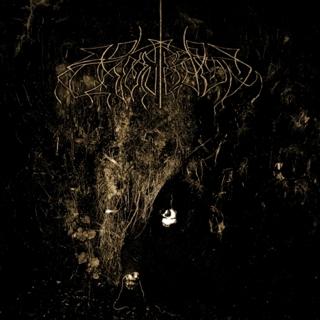
Wolves In The Throne Room - Two Hunters

"As I came home through the woods with my string of fish, trailing my pole, it being now quite dark, I caught a glimpse of a woodchuck stealing across my path, and felt a strange thrill of savage delight, and was strongly tempted to seize and to devour him raw; not that I was hungry then, except for the wildness which he represented. Once or twice, however, I found myself ranging the woods, like a half-starved hound, with a strange abandonment, seeking some kind of venison which I might devour, and no morsel could have been too savage for me" - Henry David Thoreau, Walden.

Can you imagine the idealistic, well-educated nineteenth-century intellectual stalking through the woods, the blood and entrails of some forest creature dripping from his mouth and beard? This historic scene points forwards towards the paradoxes, ambiguities and contradictions that form the intellectual manure fertilizing American Black Metal band "Wolves In The Throne Room" (WITTR).

WITTR's latest release, "Two hunters", is an album of magnificent paradoxes. WITTR's band member all hail from the DIY punk underground (an idealistic left wing environment) but make Black Metal (a genre with links to the radical right wing). WITTR subscribes to a deep-ecological ideology, but use electrical instruments, mixing boards and what-have-you. They espouse a philosophy, yet forswear urban life - never mind that the birth of philosophical thought is indelibly connected to the birth of the polis and that ecological thought is the fruit of academics, not of farmers.

WITTR are acutely aware of these paradoxes and seems to feel deeply guilty about them: "We are all hypocrites and failures" the band states in an interview (here).

The ethical dissonance between their ecological beliefs and the realities of being a band in 21st century America, cause the to attempt to reframe Black Metal's ethos: "If you listen to BM, but you don’t know what phase the moon is in, or what wild flowers are blooming then you have failed" the band states. Of course, from the perspective of the history of Black Metal this is patent nonsense. The members of the Norwegian early Black Metal scene were middle class boys living in apartment blocks and suburbs; and the scene's omphalos was an urban site, the record store "Helvete" in the city of Oslo, Norway's capital. I doubt that Varg Vikernes and Øystein Aarseth were at that time interested at all in botany or astronomy. If early Black Metal takes any position with regards to the countryside, it is that of a perverse urbanoia - proudly donning the mantle of the city-dweller's worst fears about the countryside - never mind that they were city dwellers themselves.

I see this reframing of Black Metal's ethos as a reversal of the polarities of transgression. Nature imagery in early Norwegian Black Metal if firmly on the side of evil - if Burzum, Mayhem and their ilk would have known the paragraph from Walden quoted above, it would have been because of it's bloodthirstiness and savagery, and not because Thoreau was so very much in tune with nature. Not so for WITTR - nature is on the side of the good for them, and technological civilization on the side of evil. For WITTR, using technology is a transgression.

In this sense, WITTR owe much to the transvaluation of Black Metal initiated by Burzum's Varg Vikernes. It was Vikernes who transformed the transgressive, "evil" position of early Norwegian Black Metal into a less ambivalent position. Basically Vikernes started to believe that the transgressive positions he and his peers had taken initially were non-transgressive, "good" positions. Before becoming a national socialist, Vikernes used anti-Christian Nazi imagery to transgress the ethical boundaries of Scandinavian Christian social democracy; later he actually subscribed to that drivel. It was also Vikernes who first stressed ecological concerns. "Burzum is one of our strongest influences" states WITTR's Aaron Weaver: "Burzum creates an intense mythic space with the music that evokes an ancient, tribal order: one can become lost in that world".

I would regret very much WITTR regressing wholly into a late-Burzumesque occidentalism, for I feel it is neither their deep-ecological thought nor their back-to-the-land idealism which provides the fertile ground from which their music springs: but it is the propulsive power of a system divided against itself, ecological thought realizing it is impossible and tearing itself up, it is the incoherencies, the paradoxes and the ambiguities, which provide the music with it's impetus.

Though WITTR calls music that is processed through the lens of technology 'a compromise' I like those parts of the album best in which technological processing is most audible - such as the instrumental opening track, which starts with an audio sample (electronica!) of crickets chirruping. That first track has a majestic sound not unlike the 'shoegaze' music of the 1990s; the rest of the album employs more familiar Black Metal tropes. The album as a whole creates a beautiful landscape-like spatiality with torrents of distortion, feedback precipices, droning riffs and a processed drum sound. On the last two tracks, the voice of Jessica Kinney ( Eyvind Kang and Asva) rises above the din, her Dead-Can-Dance-style soprano evoking Alpine purity and ancientness. The melodies are slow yet as aesthetically powerful as sunlight breaking through the clouds, conjuring up colossal mountains, primeval woodlands, skies, storms, mist. From the interview: "The music is about wild forests, unfettered rivers, nature: furious and vengeful". WITTRs music calls to mind the conception of nature as sublime, as conception historically grounded in the Romanticism of the nineteenth century.

In fact, the music resembles not so much nature itself as a big Romantic landscape painting, in the style of Caspar David Friedrich. And it is exactly this painterly quality I love about WITTR's "Two Hunters": the sense that though nature's majesty is depicted, one can see the technologies of canvas and brush-strokes if one studies the artwork at close range.


Post scriptum

Links towards other WITTR interviews here and here and here and here.

Is WITTR's Jessica Kinney also this Jessica Kinney?

Tuesday, June 24, 2008

N.i.l. - Nihilism Is Liberation

"Nihilism Is Liberation": abbreviated, this motto forms the name for the new band of US Black Metal foreman Imperial (Neill Jameson, formerly of Krieg and Twilight) and J. Marcheski (March Into the Sea, Urine).

The motto presents nihilism as a dark Enlightenment, nihilism as man’s emergence from his self-imposed humanist shackles. For Imperial, Kant's 'Sapere Aude' means to dare to espouse a violent, Social Darwinist mutation of Mad Max-style anarcho-primitivism which does away with all the niceties of humane thought. Imperial, bastard child of Lodovico Settembrini and Leo Naphta, adheres to a particularly virulent form of occidentalism:

"I believe in a world free of humanity and social morality where the beast in man could be allowed to thrive and be set upon the weaker species. (...) I would bring back the old systems that allowed man to be a lawless wanderer, shaping his own world to fit his own desires. Man prospered and became more intertwined with his beast form during nomadic times. Freedom from want, freedom from need. And if that didn't work then unleash the missiles... (...) Nothing in the modern world is worth saving. Our history and ancient cultures/traditions from which we all come from. Every race should be proud of its heritage and maintain this pride in their daily functional lives. The old ways, before the plagues of modern life and religion, were best suited for man's needs. A world turned to ash so that it may be reborn like the Phoenix is the only way for us to reach the true potential that we are born with. Cleanse the races and creeds and allow the weak to be devoured by the wolves instead of giving them a crutch to lean on." (sourced here).

As you can read, Imperial's political philosophy is none too sophisticated - but then again, what else would you expect from a man who has called Michele Soavi's 1989 horror film La Chiesa "Argento's greatest work" (here)? On the other hand, it shows an intellectual honesty lacking in more politically correct forms of anarcho-primitivism: Imperial openly acknowledges that destroying the state, eliminating technology and industry and dismantling civilization can only be brought about by, and will result in, killing billions ("...unleash the missiles.").

N.i.l.'s music - especially the fast tracks - reflects the brutality of Imperial's ideological views: it is an album of harshly droning Black Metal, of relentlessly primitivist, repetitive one-riff-per-song Noise.

But there is an other side to Imperial's music, which comes to the fore in N.i.l.'s self-titled album more clearly than it ever did in Krieg. That other side is mournful, sombre, minor key. In N.i.l.'s debut album, this side is already evident in the very first track,"Plague Doors Rusted Shut", which opens with the sad sound of record crackle, of vinyl grown old and forgetful, and subsequently introduces the plangent sounds of an acoustic guitar. But the sorrowful side is most evident in the slower, Burzumesque tracks, on which atypical instruments such as a mandolin and singing bowls are used. Burzumesque - but where melancholy in Burzum signified a nostalgic longing for a lost Viking Eden, the sadness in N.i.l. seems to have a different meaning: Imperial comes across as too cynical to yearn for a Paradise Lost. Where in Burzum melancholia strengthens the band's ideology, N.i.l.'s sadness seems to be at odds somehow with the ideological content: why laments, instead of brutal paeans to an anarcho-primitive future?

I feel that there is a discontinuity in N.i.l.'s music, a break, where two mutually exclusive codes collide. One code is Imperial's 'official' ideology, which puts forward nuclear Armageddon as a means to achieve a social-darwinistic anarcho-primitivism, an ideology informed by Black Metal's 'canonical' Misanthropism, an ideology of hateful Enlightenment. The other code may well be an merciful, pitying side, a hidden side which where the temptation of the end of civilization can be lost to an almost general sensitivity to human suffering.

I love it when Imperial plays Black Metal cover versions of non-Black Metal songs: his version of the Velvet Underground's "Venus In Furs" was the best song on Krieg's excellent 2004 album "The Black House". The best song on this album is N.i.l.'s Black Metal cover version of a Big Black song: "Bad Houses" from the 1986 album "Atomizer" (an album of which the cover art is also governed by the temptation of the end). In the lyrics to this song, again two, conflicting codes are in evidence: a moral code ("I tell myself I will not go") and a second code, which transgresses the first ("Even as I drive there"). The moment when Imperial speaks these lines in an untreated, rather flat Midwestern parlando is the high point of this album: Big Black Metal. The conflicting codes are mirrored in the music, fuzzed out Black Metal colliding with catchy Punk Rock.

Again, it is the untenable juxtaposition of two codes which creates a tension in N.i.l.'s music, a tension which raises N.i.l. above the facile misanthropy of most Black Metal.

Though N.i.l.'s self-titled album lacks the raw excellence of Krieg's "The Black House" and the immediacy of that band's "Blue Miasma", with N.i.l. Imperial has created an interesting platform for creating Black Metal that burns with inconsistencies, ambiguities and contradictions. N.i.l. has announced that where this album explores the drone, the second album, to be titled "Nothing.Is.Limitless.", will investigate Post Rock and other non-Black Metal music. I am certainly interested.


Links

Here are links to interviews with Imperial: 1, 2, 3, 4, 5.

Monday, October 30, 2006

Bin Laden Burzum

Finished Buruma & Margalit's 'Occidentalism' in the train today - a good (not brilliant), New York Review of Books-style journalistic account of the western origins of anti-western thought, and the influence of this thought on radical political islamism.

The book reminded that many (especially Scandinavian and Eastern European) Black Metal bands espouse a strong anti-western worldview; a worldview which springs from the same politically poisoned well of romaticism as Osama Bin Laden's.

Thus, it made me wonder if the impossible genre of Islamist Black Metal could have sprung into existence, if only many radical Islamists had not believed the Qu'ran prohibits music. Bin Laden Burzum!

Saturday, October 28, 2006

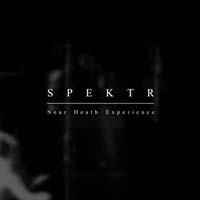
Spektr - Near Death Experience

A few posts ago, in a review of Xasthur's 'Subliminal Genocide', I called out for some "Striborg meets Stockhausen" music. Sometimes, such calls are answered: the sound of French Black Metal band Spektrs cd "Near Death Experience" roared back at my call, out of the dark abyss.

The French Black Metal scene is a very active one: bands Blut aus Nord, Haemoth, Deathspell Omega, Mütiilation and their ilk have spilled a blot of the blackest ink on the map of Europe, centered on Paris.

One of the salient features of many French Black metal bands is their comparatively intellectual orientation: where most black metal bands share metal's general anti-intellectualism, French black metal bands casually inject quotes of Georges Bataille into their interviews, and use obscure philosophical, occult and theological terms in their communications. Of course, the French have a reputation to keep up: 'Les Fleurs Du Mal', Baudelaire's towering floral hymn to Satan, still casts a shadow over these modern acolytes of the Dark One - not to speak of Baudelaire's progeny, from Lautreamont and Gérard de Nerval to Artaud and Bataille.

Another salient feature of French Black Metal is it's orthodox satanism. With regards to Satanism it is interesting to see that recently Satanist Black Metal has started to use the language of fundamentalism. For example, from the website of Swedish Black Metal band Ondskapt: "To worship him is to obey a holy will, immortal in its very fundaments. Ondskapt make no compromise when it comes to religiousness. Our music is completely dependant on the beliefs of the band. The music and lyrics exist solely through our faith and NEVER vice versa!". Many Black Metal bands have started to call themselves 'Orthodox', a term that generally refers to conservative dogmatism and is often used for those strains of Islam that are connected to fundamentalist violence. Of course, that one of the most heretic and apostatic musical genres has started to call itself 'orthodox' is deeply ironic. Without doubt, this fundamentalist language is used because since it has become transgressive to use it, as fundamentalist religion has become identified with terrorism, violence and evil; and Black Metal absorbs everything that is transgressive into it's culture. Thus, the consequences of Osama Bin Laden's actions have reached even as far as Black Metal; and it might be said that the western romantic nihilism that has influenced the Al-Qaeda ideology (see Buruma & Margalits 'Occidentalism') has come full circle. Perhaps, if more terrorist attacks occur in the coming years and the identification of fundamentalism and evil grows stronger, the language of satanic religious orthodoxy will eclipse the language of fascism in black metal.

Yesterday I bought French Black metal band Spektr's cd 'Near Death Experience', their second release.

It is not in itself the guitar playing or the vocals that make 'Near Death Experience' one of the most interesting recent albums in the Black metal genre: though somewhat slower, these resemble that of Haemoth on the Kontamination cd: cold, tinny, brittle yet fierce, harsh, trancelike (in fact, Haemoth is supposedly part of this band and in any case responsible for the vague but macabre black and white artwork of the Spektr cd cover).

And it is not in itself the fact that Spektr uses sampling and programming as part of their Black Metal palette, that make me call 'Near Death Experience' a powerful experience of transnormal anguish: ever since Burzum's 'Filosofem', electronica has been part and parcel of the genre's instrumentarium.

"What is it then? What is it? Tell us, Valter!"

It is the sound design, those weird droney waves of sub-bass sound that haunt my subwoofer, making it walk trough the living room as if possessed. It is the fact that Hth's 'rythm anomalies' incorporate technically proficient and sometimes even funky jazz drumming: such an unusual combination of black and blackened musics. It is fact that Spektr lets film noir (very noir) ambience collide with the harshest and most icy of black metal blizzards in an unique way. It is the way "clicks and cuts", digital glitches, are treated with reverb and echo, making them sound as if they are overgrown with sickening, whitish fluffy mildew. It is the ectoplasmic ambient drone of short wave radio static ... the samples of voices which seem to have been weathered by the ages ... Basinski-like rotting tape loops, the aural exquivalent of old Victorian ghost photographs ... dusty and dirty ... grainy ... blurred, faded ... scratched, torn ... a Sadean Stockhausen's 'Aus Den Sieben Tagen'... Need I go on? Must I?

It seems appropriate to end this post with a long samples of the first Chant de Maldoror:

"Alors les chiens, rendus furieux, brisent leurs chaînes, s'échappent des fermes lointaines ; ils courent dans la campagne, ça et là, en proie à la folie. Tout à coup ils s'arrêtent, regardent de tous côtés avec une inquiétude farouche, l'œil en feu ; et, de même que les éléphants avant de mourir, jettent dans le désert un dernier regard au ciel, élevant désespérément leur trompe, laissant leurs oreilles inertes, de même les chiens baissent leurs oreilles inertes, élèvent la tête, gonflent le cou terrible, et se mettent à aboyer, tour à tour soit comme un enfant qui crie de faim, soit comme un chat blessé au ventre au-dessus d'un toit, soit comme une femme qui va enfanter, soit comme un moribond atteint de la peste à l'hôpital, soit comme une jeune fille qui chante un air sublime, contre les étoiles au nord, contre les étoiles à l'est, contre les étoiles au sud, contre les étoiles à l'ouest ; contre la lune ; contre les montagnes semblables au loin à des roches géantes, gisantes dans l'obscurité ; contre l'air froid qu'ils aspirent à pleins poumons, qui rend l'intérieur de leur narine rouge, brûlant ; contre le silence de la nuit ; contre les chouettes dont le vol oblique leur rase le museau, emportant un rat ou une grenouille dans le bec, nourriture vivante, douce pour les petits ; contre les lièvres qui disparaissent en un clin-d'œil ; contre le voleur qui s'enfuit au galop de son cheval après avoir commis un crime ; contre les serpents remuant les bruyères, qui leur font trembler la peau, grincer les dents ; contre leurs propres aboiements qui leur font peur à eux-mêmes ; contre les crapauds qu'ils broient d'un coup sec de mâchoire (pourquoi se sont-ils éloignés du marais ?) ; contre les arbres dont les feuilles mollement bercées sont autant de mystères qu'ils ne comprennent pas, qu'ils veulent découvrir avec leurs yeux fixes, intelligents ; contre les araignées suspendues entre leurs longues pattes, qui grimpent sur les arbres pour se sauver ; contre les corbeaux qui n'ont pas trouvé de quoi manger pendant la journée, et qui s'en reviennent au gîte l'aile fatiguée ; contre les rochers du rivage ; contre les feux qui paraissent aux mâts des navires invisibles ; contre le bruit sourd des vagues ; contre les grands poissons, qui, nageant, montrent leur dos noir, puis s'enfoncent dans l'abîme ; et contre l'homme qui les rend esclaves".

Thursday, October 26, 2006

Books

Recent book acquisitions, all three second hand:
  • Dostoewksy, 'Crime And Punishment';
  • Ian Buruma & Avishai Margalit, 'Occidentalism'; and
  • Clifford Geertz, 'Available Light. Anthropological reflections on philosophical topics'.

Saturday, May 17, 2008

Horde

In Black Metal culture, the term 'Horde' is often used as a metaphor for 'band'. Even one-man Black Metal bands are described as Hordes!

Undoubtedly, the word 'Horde' is used in Black Metal culture because it carries connotations of violence, brutality, barbarity, belligerence, masculinity. The history of the use of this metaphor in Black Metal is obscure: I have not been able to reconstruct how it became part of Black Metal culture. Perhaps some reader of this post with a better knowledge of Black Metal history can enlighten me?

Nevertheless, in this post I will examine the 'web of significance' of the term 'Horde'.

The etymology of the word 'Horde' itself is clear: 'Horde' is a term of Turkic origin meaning a royal residence or camp. The 'Horde' is the residence of the Khan (paradoxically, where the original Turkic word had connotations of settling down, of stasis, the contemporary word has connotations of movement: a horde is teeming, swarming, advancing). Genghis Khan united the nomadic tribes of northeast Asia, and thereby founded the Mongol Empire, which eventually came to occupy most of Asia. Under Genghis Khan's grandson Batu, the Mongols definitively conquered Volga Bulgaria and the Kievan Rus in 1237. The Mongols brought a terror to Europe that would is remembered to the present day. However, the Mongol empire divided into competing factions before the thirteenth century was over, and in 1502 its last stronghold in Russia ceased to exist. Nonetheless, the name for their awesome military force would leave its burn mark on the languages of Europe: the Horde.

The mythic resonance of the word 'Horde' would lead Charles Darwin to use it in his 1871 book "The Descent of Man and Selection in Relation to Sex". He used the term 'Horde' to designate the social groups of primeval men and the ape-like progenitors of man. The sociability within these barbarous groups, from which all civilized nations descend, was the result of natural selection, spurred on by increasing reasoning powers and foresight, and by the praise and the blame of other members of the group. For Darwin, the male was the actor of natural selection, while the female was merely passive: "Man is more powerful in body and mind than woman, and in the savage state he keeps her in a far more abject state of bondage than does the male of any other animal; therefore it is not surprising that he should have gained the power of selection." The era in which this power of selection was wielded is long gone: "It deserves attention that with mankind the conditions were in many respects much more favorable for sexual selection, during a very early period, when man had only just attained to the rank of manhood, than during later times. For he would then, as we may safely conclude, have been guided more by his instinctive passions, and less by foresight or reason. He would have jealously guarded his wife or wives." I interpret Darwin's text as a creation myth, a story or explanation that describes the beginnings of humanity. Darwin' myth is an ethical precept that sanctions Victorian gender relations. In this myth, the primitive horde is presented as simultaneously attractive (there is more than a little nostalgia for the era when men wielded 'the power of selection') and repulsive ('an abject state of bondage').

Sigmund Freud's 1913 book Totem and Taboo uses Darwin's text as the basis for some myth-telling of his own. Drawing far-reaching conclusions for very superficial ethnographic knowle, he wrote: "All that we find [in Darwin's primal horde] is a violent and jealous father who keeps all the females for himself and drives away his sons as they grow up. (...) One day the brothers who had been driven out came together, killed and devoured their father and so made an end of the patriarchal horde. United, they had the courage to do and succeed in doing what would have been impossible for them individually. (Some cultural advance, perhaps, command over some new weapon, had given them a sense of superior strength). Cannibal savages as they were, it goes without saying that they devoured their victim as well as killing him. The violent primal father had doubtless been the feared and envied model of each one of the company of brothers: and in the act of devouring him they accomplished their identification with him, and each one acquired a portion of his strength. The totem meal, which is perhaps mankind's earliest festival, would thus be a repetition and a commemoration of this memorable and criminal deed, which was the beginning of so many things - or social organization, of moral restrictions and of religion." For Freud, the Horde as a social group - and indeed, humanity as a social group - is founded upon a crime - a crime which Freud describes with a strange combination of attraction and repulsion ('memorable and criminal').

Darwin's and Freud's myths remind me strongly of ethnologist Michael Taussig's 1987 book "Shamanism, Colonialism, and the Wild Man: A Study in Terror and Healing". In this book, Taussig investigates the “wildness” projected onto American Indians by Western colonial imagination. This 'wildness' evokes bloodthirsty repression by colonial (ecclasiastical and capitalist) authorities of the Indians it is projected on: the savages must be brought in line by savage means. At the same time, the 'wildness' projected on the Indians also leads the colonialists to impute supernatural healing powers to the Indians. Taussig: “So it has been through the sweep of colonial history where the colonizers provided the colonized with the left-handed gift of the image of the wild man--a gift whose powers the colonizers would be blind to, were it not for the reciprocation of the colonized, bringing together in the dialogical imagination of colonization an image that wrests from civilization its demonic power”. Cannibalism is an essential trait of the wildness projected onto Indians. Likewise, for Freud the cannibal wildness of oedipal totemism must be brought in line through civilizing psycho-analysis. Freud constructs psycho-analysis as a colonialization by consciousness of the exotic and savage jungle of the unconscious, which is simultaneously the exotic and savage, cannibal world of prehistory. But for Freud, the confrontation with the savagery of the unconscious also has extra-ordinary healing powers.

The 'Horde', under the name 'nomadic war machine', swarms forth again in Deleuze and Guattari's classic 1980 book of postmodernism 'A Thousand Plateaus'. Inspired by the work of British historian Arnold Toynbee and by the psycho-analytic work of Freud, the two philosophers contrast the socio-philosophical meaning of nomadic life against that of life in city-states. Where city-states are characterized by a hierarchical, homogeneous and totalitarian ("arborescent") organization, nomadism has a more freely structured, heterogeneous ("rhizomatic") organization. Nomadism is idealized by Deleuze and Guattari as a practice which must counter the capitalist greed, soulless rationalism, and superficiality of the urban landscape. Again, the 'Horde' is presented as a violent force that must heal the ills of Western culture.

So how do these connotations of the word 'Horde' relate to the use Black Metal culture makes of it? What can we say now about the web of significance woven around the word 'Horde'?

The connotations of violence, belligerence, masculinity, primitivism, cannibalism and occidentalism that the word 'Horde' has in the writings discussed above, are all relevant to Black Metal. Like with Freud's primitive Horde, in Black Metal a culture hero whose life ended in violence (Dead) was cannibalized; I'm referring of course to the rumour that Euronymous would have consumed a part of Dead’s brain. Memorable and criminal, attractive and repulsive, Black Metal has wrested its demonic power from civilization, receiving the left-handed gift of the image of the Horde and reciprocating civilization with teeming, swarming, blackened, buzzing noise.